


Small Space Minimalism: How to Make Tiny Homes Feel Bigger


Living in a small space has a way of making you more aware of everything you own. There’s less room to “hide” clutter, less room for things that don’t really serve a purpose, and less room for design choices that only look good in theory. But at the same time, small spaces also have a quiet advantage: they respond really well to simplicity.
When a space is limited, every object, color, and piece of furniture starts to matter more. And that’s exactly where minimalism becomes useful—not as an aesthetic rule, but as a practical way to make a small home feel calmer, more open, and surprisingly more spacious than its square footage suggests.
It’s less about trying to make a small space look like a big one, and more about removing the things that make it feel tighter than it actually is.
Start by Thinking in “Zones,” Not Rooms
In a small home or apartment, rooms often have to do more than one job. A living room might also be a workspace. A bedroom might double as storage. A kitchen might also be where you eat, plan your day, and sometimes even work.
Because of that, one of the most helpful shifts is to stop thinking in terms of traditional room layouts and start thinking in zones.
Instead of asking, “What should go in this room?” ask, “What activities actually happen here?”
You might notice that certain areas naturally form without you planning them. A corner where you always sit. A wall that works best for focus. A section of the room that always collects items.
Once you see these patterns, you can start organizing around them instead of forcing furniture into a layout that doesn’t really fit how you live.
Even in a tiny space, clear zones—like a sleeping area, a working area, and a relaxing area—create a sense of structure. And that structure reduces visual confusion, which is one of the main reasons small spaces feel cramped.
It also helps your brain “switch modes” more easily. When a space has structure, your mind understands what each area is for, even if the space itself is small.
Choose Furniture That Works With the Space, Not Against It

In small homes, furniture choice has an outsized impact. One bulky piece can make a room feel instantly tighter, while one well-chosen piece can open it up more than expected.
The key isn’t necessarily choosing smaller furniture—it’s choosing smarter furniture.
Pieces that serve more than one function tend to work especially well. A bed with storage underneath. A sofa that doesn’t overwhelm the room visually. A table that can be used for eating, working, or folding laundry depending on the moment.
But just as important as function is visual weight. Even if something isn’t physically large, it can still feel heavy in a space if it’s visually dense or overly solid.
Furniture that feels lighter—raised off the ground, with visible legs, or in simpler shapes—tends to make a room feel more open because your eyes can see more floor space underneath it.
That small detail alone can change how spacious a room feels.
It also helps to avoid overfilling the room. In small spaces, negative space isn’t wasted space—it’s what makes everything else feel intentional instead of crowded.
Use Vertical Space Instead of Filling Floor Space
When floor space is limited, the natural instinct is to try to work within it carefully. But in small-space minimalism, the real opportunity often comes from looking upward instead of outward.
Walls are often underused, even in very small homes. But they can hold a surprising amount of function without making a space feel crowded.
Shelving, wall hooks, vertical storage, and mounted lighting can all help free up the floor while still keeping things accessible. The goal isn’t to cover every wall—it’s to shift storage and function upward so the ground level stays more open.
When the floor is less occupied, the entire space feels larger almost immediately. Your eyes naturally travel further, and there’s less visual interruption at ground level.
Even small changes—like using tall, narrow storage instead of wide furniture, or adding a single vertical shelving unit instead of multiple low pieces—can create a noticeable difference in how open the room feels.
Vertical thinking is one of the simplest ways to “add space” without actually adding anything.
Keep Surfaces as Open as Real Life Allows
In small spaces, flat surfaces tend to become the quickest source of visual clutter. Tables, counters, desks—these areas naturally attract everyday items because they’re convenient landing spots.
But the more items that stay out on surfaces, the more visually “full” the space starts to feel, even if everything is technically organized.
Minimalist small-space living doesn’t require completely empty surfaces. That’s not realistic. But it does benefit from setting a soft limit on how much stays visible.
Instead of allowing surfaces to become default storage, it helps to give everything a clear home—even if that home is a basket, drawer, or hidden compartment nearby.
A good question to ask is: Does this need to be out, or is it just easier for me to leave it here?
Even small adjustments—like clearing a countertop before bed or resetting a table once a day—can completely change how the room feels when you walk into it.
When surfaces are calmer, the whole room feels calmer. And in a small space, that effect is even stronger because everything is closer together visually.
Let Light Do More of the Work

In small spaces, light becomes one of the most powerful design tools available.
Natural light in particular can completely change how a room feels. A space that might otherwise feel tight or enclosed can feel open and airy simply because light is moving through it freely.
Keeping windows as open as possible helps more than people realize. Heavy curtains, bulky furniture placed near windows, or dark visual barriers can all block that sense of openness.
Even artificial lighting matters. Multiple small light sources placed thoughtfully around a room can create depth and reduce harsh shadows, which helps a space feel less boxed in.
Layering light—like combining overhead lighting with floor or table lamps—adds dimension without adding physical clutter.
The goal is to avoid a single, heavy source of light and instead allow light to feel distributed and soft.
When light is used well, even a very small room can feel like it has more depth than it physically does.
Be Selective With What Stays Visible
In a small space, everything is always “on display” to some extent. There’s less distance between objects, less separation between functions, and less ability to visually hide things.
That’s why selectivity becomes especially important.
Instead of trying to decorate every surface or fill every corner, it helps to be intentional about what is actually worth seeing every day.
A few meaningful objects will always have more impact than many small ones scattered throughout a space. One artwork that feels grounding can do more for a room than multiple competing pieces. One plant can soften a corner more effectively than a cluster of decorative items.
It’s not about removing personality—it’s about letting the space breathe enough that personality can actually stand out instead of getting diluted.
When fewer things are visible, the things that remain naturally feel more significant.
And in small spaces, that sense of intention is what keeps the room from feeling chaotic.
Storage That Keeps Life Contained, Not Spread Out
In small homes, storage isn’t just about organization—it’s about controlling visual density.
Because there’s less space overall, everyday items can quickly spill into the visible environment if they don’t have a clear system. And when that happens, even a well-designed space can start to feel crowded.
The most effective approach is not just “having storage,” but making sure storage is easy to use consistently.
Closed storage tends to work best for this reason. Cabinets, drawers, baskets, and multi-purpose furniture help keep everyday life accessible without letting it spread visually across the room.
The key is not perfection—it’s containment. Life is still happening, but it’s not constantly on display in every direction.
Even simple habits help: returning items to a designated spot at the end of the day, limiting “temporary” piles, or using one consistent place for small everyday objects like remotes or chargers.
When storage works well, a small space can stay functional without feeling overwhelmed.
Small Spaces Feel Bigger When They Feel Simpler

Small space minimalism isn’t about pretending a tiny home is something it’s not. It’s about working with the limits instead of against them.
When you reduce unnecessary furniture, keep surfaces clearer, use vertical space, layer light thoughtfully, and let structure guide how the space is used, something interesting happens. The space doesn’t physically change—but it feels more open, more breathable, and easier to move through.
It stops feeling like a collection of things squeezed into a small area and starts feeling like a space that actually supports your daily life.
And in the end, that’s what makes a small home feel bigger—not more square footage, but less visual and mental noise competing for attention inside it.
LEARN MORE:
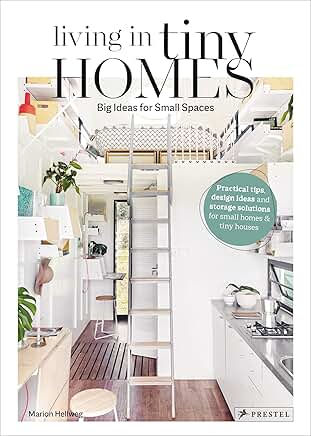
*As an Amazon affiliate I earn from qualifying purchases.


Comments