


Review: The Boy in the Striped Pajamas by John Boyne

*As an Amazon Affiliate I earn from qualifying purchases.
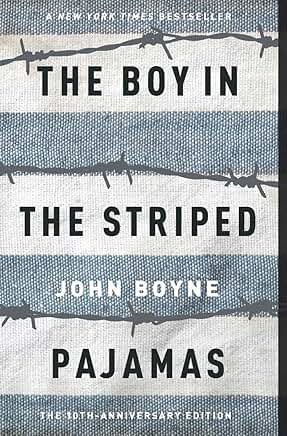
The Boy in the Striped Pajamas by John Boyne is a deeply unsettling story that approaches the Holocaust through the limited understanding of a child, which makes its impact both emotional and difficult to forget.
The story follows a young boy named Bruno, who moves with his family to a new home near a concentration camp during World War II. At first, Bruno doesn’t understand what is happening around him. He notices fences, strange uniforms, and people who look different from his own family, but he interprets everything through a very innocent, childlike lens.
One of the most important relationships in the story is between Bruno and a boy he meets on the other side of the fence, Shmuel. Despite being in completely different circumstances, the two form a friendship through conversations at the fence. Their meetings are quiet and simple, built on shared curiosity and loneliness rather than a full understanding of the world dividing them.
What makes the book so striking is how much the reader understands compared to Bruno. While he sees things as confusing or unfair in a vague way, the reader can recognize the historical reality behind what is happening. That gap in understanding creates a constant sense of tension throughout the story.
Bruno’s innocence is central to how the story is told. He often misinterprets situations, terms, and people, which highlights how sheltered his life has been. His perspective keeps the narrative focused on discovery rather than explanation, which makes the unfolding events feel even more heavy in contrast.
The fence between Bruno and Shmuel becomes one of the most powerful symbols in the book. It represents separation, inequality, and the barrier between two completely different realities. Even though the boys speak and interact, the fence is always there, reminding both them and the reader of the limits placed on their friendship.
Bruno’s family adds another layer of complexity, especially as his father’s role becomes clearer. The tension between family loyalty, authority, and moral awareness grows throughout the story, even if Bruno himself doesn’t fully understand it. The adults around him carry knowledge and responsibility that the children cannot see.
The writing style is simple and direct, which matches Bruno’s perspective. It avoids complex explanations, instead allowing events to unfold as he experiences them. That simplicity makes the story accessible, but also increases its emotional weight because the reader is often filling in what Bruno cannot yet comprehend.
As the story moves toward its conclusion, the sense of innocence becomes more fragile. The contrast between childhood curiosity and the harsh reality of the world around him becomes more pronounced, leading to an ending that is especially difficult to process.
The Boy in the Striped Pajamas by John Boyne is a haunting and emotionally heavy story about friendship, innocence, and misunderstanding during a dark period of history. Through the relationship between Bruno and Shmuel, it explores how limited understanding can shape a child’s view of the world, leaving a lasting emotional impression on the reader.


Comments