


Review: The Call of the Wild by Jack London

*As an Amazon Affiliate I earn from qualifying purchases.
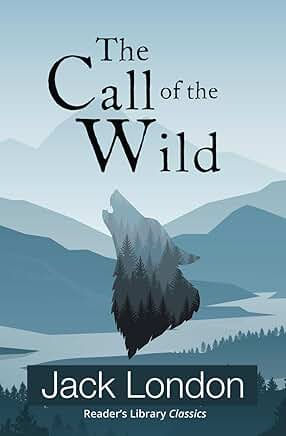
The Call of the Wild by Jack London is a gripping survival story that pulls you straight into the harsh, unpredictable world of the Yukon during the Klondike Gold Rush. It’s intense, direct, and focused on instinct, survival, and the pull between civilization and wilderness.
The story follows Buck, a domesticated dog who is suddenly taken from a comfortable home in California and thrown into the brutal environment of the North. From the beginning, Buck’s life is turned upside down. He’s no longer treated as a pet with comfort and familiarity—he’s forced into a world where strength, adaptability, and quick learning decide whether you survive or not.
What makes Buck such a compelling character is how gradually he changes. At first, he still carries habits from his domestic life, but as the story progresses, he begins to rely more on instinct. The transformation isn’t instant—it happens through experience, pressure, and exposure to harsh conditions. Each challenge he faces pushes him further away from comfort and closer to something more primal.
The environment itself plays a huge role in the story. The frozen wilderness of the Yukon is described in a way that feels both beautiful and dangerous. Snow, ice, and endless cold aren’t just background details—they actively shape the characters’ decisions and survival. Everything in the setting feels like it has weight and consequence, from hunger and exhaustion to competition among the sled dogs.
One of the most important themes in the book is the idea of “the call of the wild” itself. As Buck becomes more adapted to life in the North, he starts to feel a pull away from human society and toward something more instinct-driven and natural. That inner conflict between learned behavior and instinct is what drives much of the emotional core of the story.
The humans in the book also reflect different attitudes toward survival and power. Some are harsh and abusive, treating the dogs purely as tools, while others show moments of care or respect. These differences highlight how environment and pressure can shape behavior, both in animals and people.
Buck’s relationships with other dogs also add depth to the story. In the pack, there is constant tension between cooperation and competition. Leadership is not given—it’s taken through strength, intelligence, and endurance. Watching Buck learn how to navigate this system is one of the most engaging parts of the book.
The writing style is straightforward but vivid, focusing on action, environment, and instinct rather than long emotional reflection. That makes the story feel fast-paced and intense, especially during moments of conflict or survival challenges like sledding across dangerous terrain or facing rival dogs.
As Buck changes, the story also raises questions about what “civilization” really means. Is it comfort, safety, and structure—or is it something more flexible that can be left behind when survival demands it? The book doesn’t answer that in a simple way, but it shows Buck drifting further from one world and closer to another.
Overall, The Call of the Wild by Jack London is a powerful survival story that explores instinct, adaptation, and identity through the journey of Buck. It’s intense, atmospheric, and focused on the raw struggle between comfort and survival, leaving a strong impression of how deeply environment can shape who we become.



Comments