


Review: Atlas Shrugged by Ayn Rand

*As an Amazon affiliate I earn from qualifying purchases.
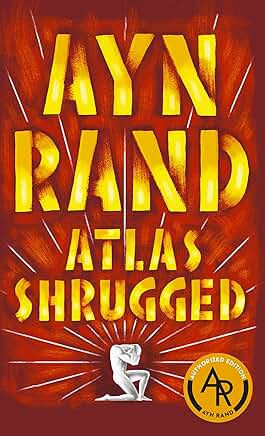
Atlas Shrugged is a sprawling philosophical novel that combines political commentary, economic ideas, and dramatic storytelling into a sweeping exploration of individualism and society. Written by Ayn Rand and published in 1957, it presents a world where industry, creativity, and innovation are slowly collapsing under increasing government control and social pressure.
The story follows Dagny Taggart, a determined railroad executive who is trying to keep her company alive in a system that seems increasingly hostile to productivity and ambition. Alongside her is Hank Rearden, a brilliant industrialist whose inventions and work ethic make him a key figure in a declining economy. Both characters are portrayed as highly capable individuals struggling against what Rand presents as a society that punishes success and rewards dependency.
As the narrative unfolds, a mysterious figure named John Galt becomes central to the story. He is associated with a growing “strike” of the world’s most talented minds—engineers, thinkers, and creators who withdraw their contributions from society. This gradual disappearance of innovation forms the backbone of the book’s larger philosophical argument about the importance of individual achievement and personal freedom.
One of the most distinctive features of the book is its heavy focus on ideas. Conversations often turn into long philosophical exchanges about morality, capitalism, productivity, and the role of government. Rand uses these dialogues to present her philosophy of Objectivism, emphasizing rational self-interest and condemning what she sees as collectivist thinking.
The world-building is deliberately exaggerated, presenting a society in crisis where infrastructure fails, industry stalls, and bureaucratic systems become increasingly inefficient. This backdrop supports the novel’s central conflict between creators and regulators, framing economic and political systems as direct expressions of moral philosophy.
Dagny’s personal journey adds emotional structure to the story, especially as she navigates relationships, loyalty, and her commitment to her work. Her drive and resilience make her a compelling figure within the novel’s ideological framework, even as the narrative often prioritizes philosophical discussion over traditional character development.
The writing style is direct and sometimes intense, with long passages dedicated to speeches and ideological arguments. This can make the pacing uneven, but it also reflects the book’s ambition to function not just as a story, but as a philosophical statement about how society should function.
Atlas Shrugged remains one of the most discussed and debated works in modern literature because of its strong ideological stance and its vision of individual achievement as the foundation of progress. Whether read as a political statement, a philosophical treatise, or a dramatic story, it continues to provoke strong reactions and ongoing discussion about the balance between society, freedom, and responsibility.



Comments