


Hidden Gems in Italy Most Travelers Miss

Updated: Sep 23
Italy has a way of pulling you in with its iconic cities and landmarks—but some of the most meaningful travel moments tend to happen in the places you almost overlooked. Smaller towns and lesser-known regions invite you to slow down, look around, and experience daily life in a way that feels more genuine. Instead of rushing from one major attraction to the next, you have space to notice the details—the sound of church bells, the rhythm of a local market, or a quiet café tucked into a side street. If you’re willing to venture just a little off the typical path, these hidden gems offer a richer and more memorable way to experience Italy.
Civita di Bagnoregio: The Dying City

Perched dramatically on a fragile hilltop in Lazio, Civita di Bagnoregio feels like a place suspended between past and present. Often referred to as “the dying city,” it sits on land that has been slowly eroding for centuries, giving it a slightly surreal, almost cinematic quality. The only way to reach the village is by crossing a long pedestrian bridge, and that walk alone sets the tone—it creates a sense that you’re leaving the modern world behind and stepping into something quieter and more timeless.
Once inside, there isn’t a checklist of major attractions, and that’s exactly the point. Civita is best experienced slowly. The narrow stone streets wind gently through the village, opening up to small piazzas, viewpoints, and homes decorated with flowers and greenery. You’ll notice how peaceful it feels compared to more crowded destinations, especially if you visit early in the morning or later in the afternoon when day-trippers have thinned out.
Take time to pause at the edges of the village where the views stretch across the countryside. Stop for a relaxed meal at a small restaurant, or simply sit and take it all in. Civita di Bagnoregio isn’t about doing a lot—it’s about being present in a place that feels incredibly unique.
Alberobello: A Fairytale of Trulli Houses
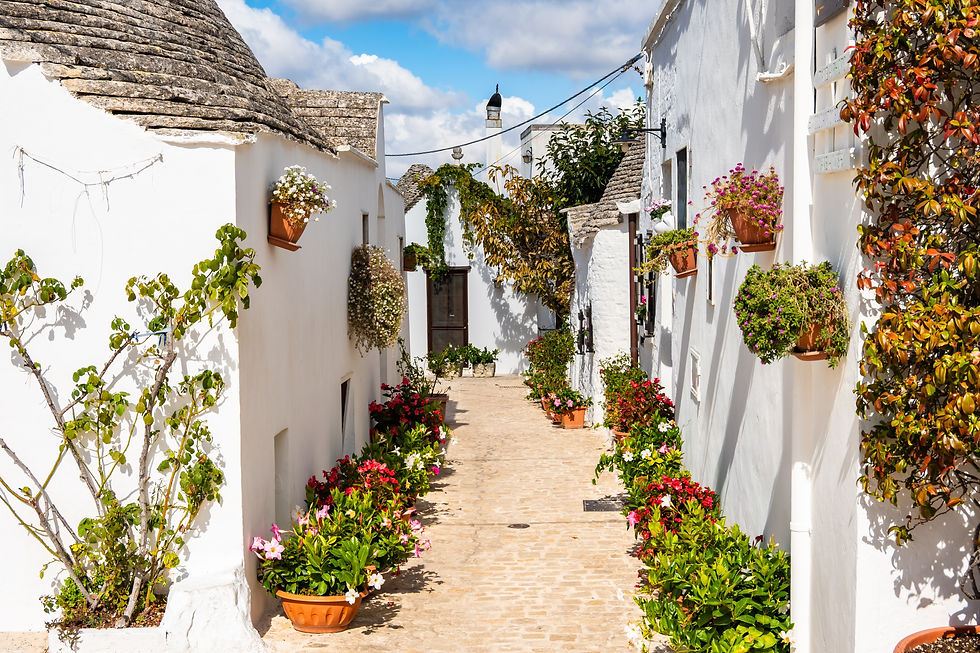
In the southern region of Puglia, Alberobello offers one of the most distinctive landscapes in Italy. The town is famous for its trulli—small white stone houses topped with cone-shaped roofs that almost look like they belong in a storybook. Walking through the streets, especially in areas like Rione Monti or Aia Piccola, feels a bit like stepping into another world.
What makes Alberobello particularly interesting is the history behind these structures. The trulli were built using a dry-stone technique, meaning no mortar was used, which allowed them to be dismantled quickly in the past to avoid certain taxes. Today, they’re carefully preserved and protected, and many have been repurposed into shops, cafés, and even accommodations.
As you explore, take the time to notice the small details—symbols painted on rooftops, the thickness of the stone walls, and the way the interiors stay naturally cool. While it can get busy during the day, staying overnight changes the experience entirely. In the evening and early morning, the streets become quieter, and you get a better sense of what it’s like to live there. It’s during those slower moments that Alberobello feels less like a tourist stop and more like a living, breathing community.
Matera: Ancient Cave Living

Matera, located in Basilicata, is one of the most fascinating and historically rich places in Italy. Known for its “Sassi” districts, Matera is made up of homes, churches, and pathways carved directly into limestone rock. These cave dwellings date back thousands of years, making it one of the oldest continuously inhabited settlements in the world.
What makes Matera especially compelling is how it blends ancient history with modern life. Many of the caves have been thoughtfully restored and transformed into boutique hotels, restaurants, and galleries, allowing visitors to experience the space in a completely immersive way. Staying in a cave hotel, for example, gives you a sense of the texture, temperature, and atmosphere that defined life here for centuries.
Exploring Matera is all about movement—walking up and down staircases, discovering hidden alleys, and finding viewpoints that reveal just how layered the city is. The cave churches are particularly memorable, with faded frescoes that hint at centuries of religious life. As the sun sets, the entire city begins to glow, and by night, the lights scattered across the stone landscape create an almost magical effect.
Matera rewards curiosity. The more you wander, the more you uncover, and it’s that sense of discovery that makes it such a memorable destination.
Orvieto: A Hilltop Town with a Hidden Side

Set high above the countryside in Umbria, Orvieto offers a balance of striking architecture, rich history, and a slower, more relaxed pace. From a distance, the town looks dramatic, perched on a volcanic rock plateau, but once you arrive, it feels welcoming and easy to explore.
The cathedral is one of the first things you’ll notice. Its façade is incredibly detailed, with mosaics, carvings, and a level of craftsmanship that draws your attention even if you weren’t planning to spend much time there. Inside, the artwork continues, giving you a deeper appreciation for the town’s cultural significance.
What many visitors don’t realize is that Orvieto has an entire world beneath its surface. A network of underground tunnels and caves stretches below the town, some of which can be explored on guided tours. These spaces were used for everything from storage to shelter, and learning about them adds another layer to your understanding of how the town functioned historically.
Above ground, life moves at a comfortable pace. You can spend time in small piazzas, browse local shops, or enjoy a glass of wine produced in the surrounding countryside. Orvieto is the kind of place where you don’t feel rushed, making it perfect for a slower, more thoughtful day of exploring.
Camogli: A Coastal Escape Without the Crowds

Along the coastline of Liguria, Camogli offers a refreshing alternative to the busier destinations nearby, including Cinque Terre. With its colorful buildings lining the waterfront and its relaxed atmosphere, Camogli has all the charm people look for in a seaside village—just without the same level of crowds.
What stands out right away is how authentic it feels. This is still a working fishing village, and that influences the overall pace and character of the town. Boats move in and out of the harbor, locals go about their daily routines, and the rhythm of life feels steady rather than rushed.
You can spend your time strolling along the promenade, sitting on the beach, or enjoying a meal at a small restaurant serving freshly caught seafood. The simplicity of it all is part of the appeal. There’s no pressure to see or do everything—just being there is enough.
Camogli is also well-positioned for exploring nearby areas, whether that’s hiking along the coast or taking a short trip to places like Portofino. But many visitors find that once they arrive, they’re perfectly content to stay put and enjoy the slower pace.
Castellina in Chianti: Tuscany at a Slower Pace

In the rolling countryside of Tuscany, Castellina in Chianti offers everything people imagine when they think of this region—vineyards, olive groves, and scenic views—but in a way that feels less crowded and more personal.
The town itself is small, which makes it easy to explore on foot. One of its most interesting features is the Via delle Volte, a covered walkway built into the old defensive walls. Walking through it gives you a sense of the town’s history while also offering unique views of the surrounding landscape.
Beyond the town center, the real highlight is the surrounding countryside. This is the heart of Chianti wine country, and many of the wineries here are family-run, offering tastings that feel relaxed and welcoming rather than overly commercial. You can take your time learning about the wine-making process, enjoying local food, and simply soaking in the scenery.
Castellina in Chianti is ideal for slowing down. Whether you’re spending a few hours or a couple of days, it encourages you to move at a gentler pace and appreciate the small details that make Tuscany so special.
Why These Places Stand Out
What makes these hidden gems so memorable isn’t just their beauty—it’s the way they allow you to experience Italy differently. Without the constant movement of large crowds, you have more space to connect with your surroundings, notice everyday moments, and enjoy a more relaxed rhythm.
These are the places where you linger a little longer over a meal, strike up a conversation with a local, or discover something unexpected simply by wandering. And in many cases, those quieter, less-planned moments become the highlights of the entire trip.
Choosing to explore beyond the most famous destinations doesn’t mean missing out—it often means experiencing more.
LEARN MORE:

*As an Amazon affiliate I earn from qualifying purchases.


Comments