


Daily Sketchbook Ideas to Stay Creative


Keeping a sketchbook can be one of the simplest ways to stay connected to your creativity. You don't need a large collection of expensive art supplies, hours of free time, or a perfectly quiet studio. A few minutes, a pencil, and a willingness to experiment can be enough.
The hardest part is often knowing what to draw.
You may open your sketchbook with every intention of creating something and then stare at the blank page for ten minutes. When you don't have a specific project in mind, deciding what to put on the page can feel surprisingly difficult.
That's why having a collection of daily sketchbook ideas can be so helpful. Instead of waiting for inspiration, you can choose a prompt and start drawing.
Some days you may create a detailed study. Other days you might make a five-minute doodle. You can use your sketchbook to practice technical skills, experiment with new materials, record things you see, or simply let your imagination wander.
The goal isn't to create a masterpiece every day. The goal is to keep creating.
Draw What You See
One of the easiest ways to fill a sketchbook is to draw something that's already around you.
Look around your home and choose an ordinary object.
Try drawing a coffee mug, lamp, houseplant, pair of shoes, kitchen utensil, book, chair, or vase.
Don't worry about making it perfect.
Pay attention to its basic shapes, proportions, shadows, and interesting details. Drawing everyday objects is excellent observational practice because you can easily study the subject from different angles.
Try a Five-Minute Sketch
Set a timer for five minutes and choose something simple to draw.
When the timer starts, begin drawing immediately.
Don't erase. Don't restart. Don't worry about finishing.
The short time limit encourages you to focus on the most important shapes instead of getting caught up in tiny details.
You can repeat the exercise several times using different subjects.
Five minutes may not sound like enough time, but you'll be surprised by how much you can put on a page.
Fill a Page With Circles

Sometimes a very simple exercise can loosen up your hand.
Fill an entire page with circles.
Make them large, small, overlapping, uneven, tiny, and oversized.
Then turn some of them into objects.
One circle might become a face. Another could become a planet, orange, balloon, button, or flower center.
The exercise isn't really about drawing circles.
It's about getting your hand moving and teaching yourself not to worry about making every mark perfect.
Draw Your Morning Cup of Coffee or Tea
Turn an everyday ritual into a creative exercise.
Draw your morning mug, glass, or teapot.
Try capturing the shape of the container, the handle, the shadows, and the way light falls across it.
You can make the drawing realistic or highly simplified.
Tomorrow, draw it from a different angle.
Over time, even familiar objects can become interesting subjects when you challenge yourself to see them differently.
Sketch Your Hands

Hands are notoriously difficult to draw, which makes them excellent practice.
Study your own hand.
Try different positions: holding a pencil, resting on a table, gripping a mug, making a fist, or holding another object.
Don't worry about creating beautiful drawings.
Focus on the basic shapes, joints, proportions, and angles.
Your hands are always available as a reference, making this an easy exercise whenever you don't know what to draw.
Draw From Memory
Look at an object for a few minutes.
Put it away.
Then try drawing it from memory.
Afterward, compare your drawing with the original.
This exercise helps you notice how your brain simplifies and remembers shapes.
You might discover that you remembered certain details accurately while completely changing others.
That can tell you a lot about how you observe the world.
Try Blind Contour Drawing
Choose a simple object and place it in front of you.
Without looking at your paper, slowly draw the outline of the object while keeping your eyes on the subject.
The resulting drawing may look strange.
That's okay.
The purpose is to train your eyes and hand to work together without constantly checking whether the drawing looks "right."
Blind contour drawing can also help you loosen up and become less concerned with perfection.
Draw With Your Non-Dominant Hand
Try drawing a simple object using your non-dominant hand.
The result will probably be awkward.
That's exactly why it's useful.
Because you have less control, you're forced to pay more attention to observation rather than trying to produce a polished image.
This can be a fun way to break out of rigid habits.
Make a One-Line Drawing
Choose a subject and try to draw it using one continuous line.
Don't lift your pencil from the paper.
You can create a portrait, plant, shoe, animal, or household object this way.
The result doesn't need to be realistic.
Focus on following the contours and shapes of the subject.
This is a great exercise for simplifying forms and developing confidence with line.
Draw a Self-Portrait

You don't need to create a realistic portrait every time.
Use a mirror and make a quick self-portrait.
Try drawing yourself in five minutes, then ten minutes, then twenty minutes on different days.
You can experiment with different approaches.
Draw realistically one day. Try exaggerating your features another day. Create a simplified version another time.
Self-portraits can become an interesting record of both your artistic development and your changing perspective.
Sketch Someone in Motion
If you have access to a public place where you're comfortable sketching, try drawing people as they move.
Don't attempt detailed portraits.
Capture the basic gesture and posture.
You might have only thirty seconds or a minute before the person changes position, so focus on the overall movement rather than details.
This is excellent practice for understanding gesture, balance, and body language.
Draw Your Favorite Plant
Plants make wonderful sketchbook subjects because they don't move and can be studied over time.
Choose a houseplant, tree, flower, or herb.
Study the shapes of the leaves, how they overlap, and how the stems connect.
Try drawing the same plant from different angles.
You can also return to it throughout the year and record changes in growth.
Try a Flower Study

Choose a flower and draw it several ways.
Make one detailed drawing.
Then create a simplified version.
Try drawing it from above, from the side, and from a close-up perspective.
You can also experiment with different materials.
Use pencil one day, colored pencil another, and watercolor another.
The subject stays the same while your approach changes.
Draw an Animal
If you have a pet, you have a ready-made model.
Try sketching your pet while it's sleeping, sitting, stretching, or playing.
Animals can be challenging because they move unpredictably, but quick sketches can teach you to capture the overall shape and gesture.
Don't worry about every strand of fur.
Start with the body structure and major forms.
Try Drawing Without Looking at the Reference
Choose a photograph or object.
Study it carefully for a few minutes.
Then turn it over or put it away and draw what you remember.
This combines observation and memory and can reveal which aspects of a subject you naturally pay attention to.
Create a Texture Page
Fill a sketchbook page with different textures.
Try drawing:
Wood grain
Fur
Feathers
Glass
Stone
Metal
Water
Fabric
Leaves
Sand
You don't have to create complete objects.
Focus entirely on suggesting texture through marks, patterns, shading, and line.
This is particularly useful if you want to make your drawings feel more realistic.
Practice Light and Shadow

Choose a simple object and place it near a light source.
Draw it while paying close attention to the shadows.
Try identifying the lightest area, middle values, darker areas, cast shadow, and reflected light.
You can repeat the exercise with different objects and lighting conditions.
This helps you understand how light creates the illusion of three-dimensional form.
Make a Black-and-White Drawing
Remove color from the equation.
Use graphite, charcoal, ink, or another monochromatic medium.
Focus entirely on value, shape, texture, and composition.
Working without color can help you see whether an image works visually before color becomes part of the process.
Create a Color Palette
Choose an object, photograph, or scene that inspires you.
Create a small collection of colors based on it.
You might make a palette from a sunset, garden, beach, favorite room, or piece of clothing.
Try to mix or select colors that capture the feeling of the reference rather than simply copying every color you see.
Draw a Scene From Your Window
Your window can become a daily source of inspiration.
Draw whatever you can see outside.
It could be a street, trees, rooftops, a garden, clouds, or neighboring buildings.
Return to the same view at different times of day.
Morning, afternoon, sunset, and nighttime can create completely different compositions and lighting.
Sketch Your Favorite Place

Think of a place you enjoy visiting.
It could be a park, beach, café, library, hiking spot, garden, or even a favorite room in your home.
Draw what makes the place memorable to you.
You don't have to create a literal architectural drawing.
Focus on the details that capture its atmosphere.
Draw a Memory
Choose a favorite memory and try to represent it visually.
You might draw the location, an object associated with the experience, the people involved, or a symbolic image.
This doesn't have to be realistic.
The purpose is to explore how memories translate into visual ideas.
Turn Words Into Pictures
Choose a random word and draw whatever comes to mind.
Try words such as:
Storm.
Adventure.
Home.
Quiet.
Magic.
Summer.
Don't overthink it.
The interesting part is seeing how a single word turns into a visual concept in your imagination.
Draw a Song
Put on a favorite song and create an image inspired by it.
You could draw literally based on the lyrics or create something completely abstract based on the mood and rhythm.
Try using lines and shapes to represent the music.
A slow song might inspire flowing marks, while an energetic song might lead to sharper shapes and stronger movement.
Create an Abstract Page

Give yourself permission to make something that doesn't represent anything recognizable.
Experiment with:
Lines
Shapes
Dots
Color
Texture
Repetition
Patterns
Try filling the page without deciding what the final image should be.
Abstract exercises can be especially useful when you feel pressure to create something "good."
Draw the Same Object Ten Ways
Choose one object.
Draw it ten different ways.
Make it realistic, simplified, exaggerated, tiny, oversized, abstract, geometric, detailed, loose, and cartoon-like.
This exercise teaches you how many different visual interpretations can come from a single subject.
It can also help you discover approaches that you want to explore further.

*As an Amazon affiliate I earn from qualifying purchases.
Try a Limited Color Challenge
Choose only three colors and create a complete drawing or painting.
The limitation forces you to think creatively about color mixing and relationships.
You might choose three colors that are close together or deliberately choose contrasting colors.
Try a different combination each time.
Fill a Page With Patterns
Create your own patterns.
Try repeating leaves, waves, geometric shapes, stars, flowers, dots, lines, or abstract marks.
You can combine several patterns on one page.
Pattern exercises can be relaxing while also helping you develop consistency and control.
Draw Tiny Pictures

Instead of filling an entire page with one drawing, create several tiny ones.
Make a grid of small squares and fill each with a different subject.
You might draw a tiny house, flower, animal, face, landscape, cup, tree, or piece of fruit in each square.
The small scale can make experimentation feel less intimidating.
Draw Something Upside Down
Turn a reference image upside down and try drawing it that way.
This can make familiar subjects less recognizable and encourage you to focus on shapes, angles, and proportions rather than your assumptions about what the object should look like.
It's a surprisingly useful exercise for improving observation.
Create a Visual Diary
Use your sketchbook to record pieces of your everyday life.
Draw what you ate. Sketch a place you visited. Capture an interesting object you noticed. Draw your shoes after a long walk. Record a beautiful sunset.
The drawings don't need to be elaborate.
Over time, your sketchbook becomes a visual diary of your life.
Try a Daily Doodle
Not every sketchbook session needs to be serious practice.
Draw something silly.
Create a cartoon character. Draw a funny animal. Make a page of tiny faces. Invent an imaginary creature.
Doodling can keep creativity playful.
It also gives you a chance to create without worrying about technical skill.
Draw From a Photograph

Choose a photograph and turn it into a sketch.
You could use a personal photograph, an old family picture, a travel photo, or an interesting image you've taken yourself.
Try focusing on composition rather than reproducing every detail.
Ask yourself what makes the photograph visually interesting and how you can capture that quality in your drawing.
Create a Before-and-After Study
Choose something you're currently learning.
For example, if you're practicing eyes, draw one version today.
Then practice for several days and return to the same subject later.
Compare the two drawings.
Seeing your progress can be motivating, especially when improvement feels too gradual to notice from day to day.
Practice Perspective
Draw simple objects such as boxes, books, tables, buildings, or streets.
Pay attention to how parallel lines appear to move toward vanishing points.
You don't have to create a complicated architectural drawing.
Even simple perspective exercises can help you understand space.
Practice Faces

Faces provide endless sketchbook material.
Draw eyes, noses, mouths, ears, hairstyles, and different face shapes separately.
Then combine them into complete portraits.
Try drawing people of different ages and expressions.
You can also experiment with exaggerated or stylized faces rather than focusing only on realism.
Explore Expressions
Create a page of faces showing different emotions.
Try happiness, sadness, surprise, anger, confusion, boredom, excitement, fear, and concentration.
Pay attention to how small changes in eyebrows, eyes, and mouth can alter the entire expression.
This is particularly useful for anyone interested in illustration or character design.
Invent a Character
Create a character from scratch.
Decide what they look like, what they wear, where they live, and what kind of personality they have.
Then draw them doing different things.
You might create a character who loves gardening, a detective who always carries an oversized umbrella, or a musician who lives in a tiny apartment filled with plants.
The more you develop the character, the more drawing ideas you'll have.
Draw an Imaginary Room
Design a room that doesn't exist.
Maybe it's a cozy reading nook, artist's studio, treehouse bedroom, futuristic kitchen, or magical library.
Think about furniture, lighting, decorations, windows, and small personal details.
This is a great way to combine creativity with perspective and composition practice.
Make a Nature Collection

Choose a theme and create a collection of related sketches.
You could draw ten different leaves, seashells, mushrooms, flowers, birds, rocks, or clouds.
Collections encourage you to compare subtle differences between similar subjects.
They also make beautiful sketchbook pages.
Try a No-Eraser Day
For one sketchbook session, don't use an eraser.
If you make a mistake, work around it.
Turn the line into something else. Incorporate it into the drawing. Start another shape from it.
The goal is to become less afraid of mistakes.
You may discover that some drawings become more expressive when you stop trying to erase every imperfect mark.
Use a Different Tool
If you normally use a pencil, switch to ink.
If you usually paint, try charcoal.
If you're comfortable with markers, experiment with colored pencils.
Changing your tools can change the way you think.
A medium with less control may encourage you to work more loosely, while a highly precise tool may make you pay closer attention to detail.
Create a Monthly Theme
If daily prompts feel overwhelming, choose one theme for an entire month.
For example:
January: Everyday objects
February: Faces and expressions
March: Plants and flowers
April: Animals
May: Landscapes
June: Architecture
July: Travel memories
August: Food
September: People in motion
October: Imaginary creatures
November: Cozy interiors
December: Winter scenes
A theme gives you direction without telling you exactly what you have to create.
Don't Worry About Filling Every Page
Your sketchbook doesn't have to look like a professional portfolio.
Some pages may be messy.
Some drawings may be unfinished.
You may leave large areas blank.
You might change your mind halfway through a page.
That's okay.
A sketchbook is a place to experiment, practice, make mistakes, and collect ideas.
It doesn't have to be perfect.
Keep Your Sketchbook Accessible
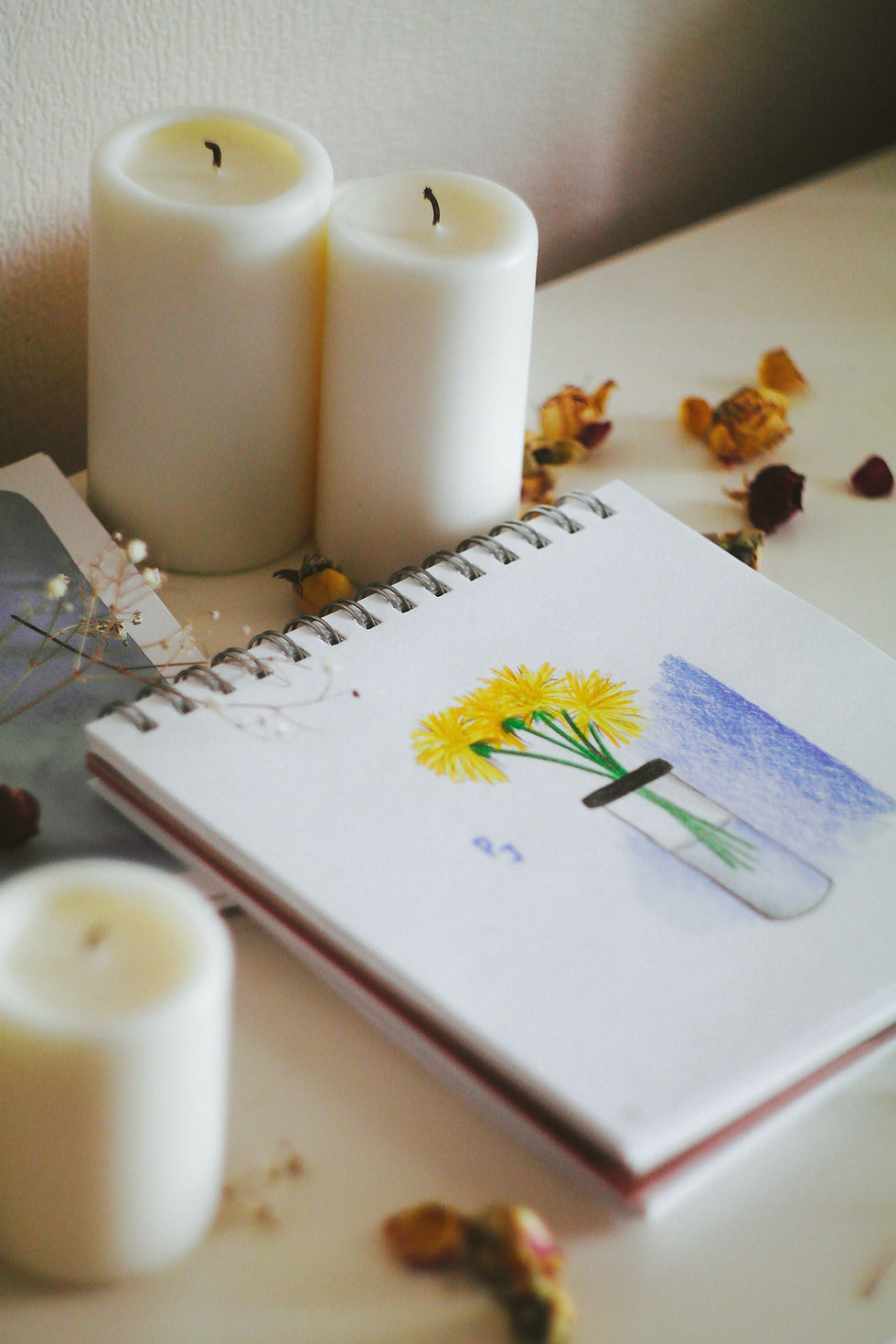
You're much more likely to draw if your supplies are easy to reach.
Keep your sketchbook somewhere visible rather than buried in a drawer.
Place a pencil or pen nearby.
You don't need to create a complicated studio setup.
Making creativity convenient can make a surprisingly big difference.
Give Yourself a Small Daily Goal
If you're struggling to maintain a sketchbook habit, make the goal extremely small.
Draw for five minutes.
Fill one small section of a page.
Complete one quick study.
Draw one object.
You can always continue if you're inspired.
The important thing is making the habit easy enough that you don't feel like you need a huge block of free time.
Don't Judge Every Sketch
Your sketchbook isn't a test.
Some drawings will be successful. Others won't.
Some will be interesting in ways you didn't expect. Some will teach you what not to do.
Try not to evaluate every page immediately.
Let yourself create without constantly asking whether the result is good enough.
The value of a sketchbook comes from the collection of experiences, not from having every page look beautiful.
Look Back at Your Progress
Every few months, flip through your sketchbook from beginning to end.
You'll probably notice things you didn't see while working day by day.
Maybe your lines have become more confident. Perhaps your proportions have improved. You may notice recurring subjects or techniques that are becoming part of your artistic style.
You may also find old ideas worth revisiting.
Your sketchbook becomes a record of your creative growth.
Make the Sketchbook Yours

There are no rules saying that a sketchbook has to contain only drawings.
Add notes, color swatches, photographs, ticket stubs, quotes, pressed leaves, collage pieces, lists of ideas, or anything else that helps you remember what inspired you.
You can turn it into a creative journal rather than simply a collection of drawings.
The more personal it becomes, the more likely you are to keep using it.
Keep Showing Up
You don't have to create something extraordinary every day.
Some days you'll be inspired and fill several pages.
Other days, you'll make one tiny sketch and close the book.
Both count.
The real benefit of a daily sketchbook isn't that every drawing will be impressive. It's that you're keeping your creative muscles active.
You're practicing observation. You're experimenting with ideas. You're learning what you like. You're becoming more comfortable making mistakes.
And perhaps most importantly, you're reminding yourself that creativity doesn't have to wait for the perfect moment.
Pick up your pencil. Open the page. Draw what's in front of you, what's in your imagination, or simply whatever comes to mind.
A few minutes today can lead to a much stronger creative habit tomorrow.
LEARN MORE:

*As an Amazon affiliate I earn from qualifying purchases.


Comments