


How to Develop Your Own Art Style in Drawing

Updated: Sep 13

Developing your own art style is one of the most exciting parts of becoming an artist, but it can also be one of the most frustrating. You may look at another artist's work and immediately recognize it, while your own drawings seem to change from one page to the next.
It's easy to wonder when you'll finally have a style that feels like yours.
The truth is that an art style usually isn't something you choose one afternoon. It develops gradually through the things you practice, the artists you study, the subjects you enjoy drawing, the techniques you naturally return to, and the artistic decisions you make over time.
Your style doesn't have to look dramatically different from everyone else's. It simply needs to reflect the way you see and interpret the world.
Whether you're a complete beginner or you've been drawing for years, there are practical things you can do to encourage your own style to emerge.
Understand What an Art Style Really Is
An art style is the recognizable way an artist creates and interprets artwork.
It can involve many different elements, including:
Line quality
Shapes
Proportions
Color choices
Shading
Texture
Composition
Subject matter
Level of detail
Facial features
Brush or pencil techniques
Two artists can draw the same subject and produce completely different results.
One might use delicate lines and subtle shading.
Another might use bold outlines and simplified shapes.
Neither approach is automatically better.
Their differences are part of what makes their work recognizable.
Don't Try to Invent a Style From Nothing
One of the biggest misconceptions about finding an art style is that you need to consciously invent something nobody has ever seen before.
You don't.
Artists naturally absorb influences from the artwork they see.
You might love the expressive faces of one artist, the loose lines of another, and the color choices of someone else.
Over time, those influences mix with your own preferences and experiences.
Your style develops through that combination.
Give Yourself Time

Your style probably won't appear after five drawings.
You may draw in several different ways during the first few years of learning.
That's completely normal.
In fact, experimentation is part of the process.
You may eventually look back at your older work and notice that certain characteristics have gradually become consistent.
Perhaps you always use strong outlines.
Maybe you prefer exaggerated proportions.
Maybe you tend toward soft shading.
Those repeated choices are clues about your developing style.
Learn the Fundamentals First
Developing a style doesn't mean avoiding the fundamentals.
Understanding basic drawing skills gives you more freedom to make artistic choices.
Work on:
Proportion
Perspective
Anatomy
Light and shadow
Composition
Shape
Form
Color theory
You don't need to master all of these before developing a personal style.
However, the stronger your foundation becomes, the more intentionally you can decide when to follow or break traditional rules.
Draw Regularly
The more you draw, the more opportunities you have to discover what feels natural to you.
You don't need to create finished artwork every day.
Try:
Quick sketches
Studies
Doodles
Character drawings
Landscapes
Still lifes
Gesture drawings
Practice exercises
Some of your most useful discoveries may happen in drawings that you never intend to show anyone.
Draw the Same Subject in Different Ways
This is a great exercise for discovering your preferences.
Choose a simple subject, such as a face, flower, tree, or cup.
Draw it several times.
Try:
Realistic proportions
Exaggerated proportions
Thick lines
Thin lines
Minimal shading
Heavy shadows
Geometric shapes
Loose sketching
Notice which versions feel the most enjoyable.
You may begin to see patterns.
Experiment With Line Quality
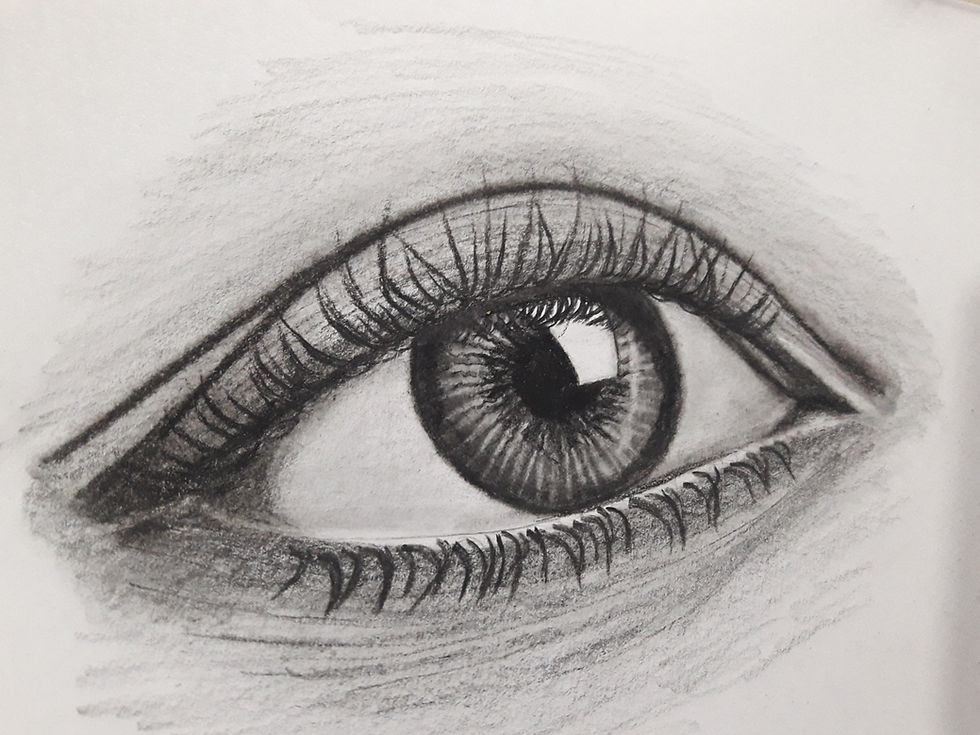
Line quality can dramatically change the appearance of a drawing.
Try making some lines:
Thick
Thin
Dark
Light
Smooth
Rough
Continuous
Broken
Loose
Precise
You may discover that you naturally prefer a particular approach.
Perhaps you like expressive, slightly messy lines.
Maybe you prefer clean, controlled outlines.
There is no correct answer.
Don't Make Every Line the Same
Uniform lines can create a clean look, but varying your line weight can add depth and personality.
You might use thicker lines around the outside of an object and lighter lines for interior details.
You could make shadowed areas darker.
Experiment with pressure as you draw.
Explore Simplification
Style often comes from deciding what to leave out.
Look at a photograph and try drawing it with as few lines as possible.
Which details are essential?
Which can be removed?
Can you communicate a person's expression without drawing every facial feature?
Can you suggest a tree without drawing every leaf?
Simplification can create a distinctive visual language.
Experiment With Exaggeration

You don't have to reproduce everything exactly as you see it.
Try exaggerating features.
Make eyes larger.
Lengthen limbs.
Enlarge hands.
Simplify noses.
Change the shape of the head.
Push expressions further.
Exaggeration can be particularly useful when developing a character-drawing style.
Play With Proportions
Changing proportions is another way to create a recognizable look.
You might draw characters with:
Large heads
Short bodies
Long legs
Wide shoulders
Tiny hands
Oversized eyes
You can experiment with subtle changes rather than immediately going to extremes.
Eventually, you may discover proportions that feel natural to you.
Develop a Consistent Approach to Faces
If you enjoy drawing people, facial features can become an important part of your style.
Experiment with different approaches to:
Eyes
Eyebrows
Noses
Mouths
Ears
Jawlines
Hair
Try drawing several characters.
Then look for patterns.
Do you naturally draw similar eye shapes?
Do your noses tend to be simplified?
Do you emphasize eyebrows?
Do you prefer angular or rounded faces?
These recurring choices can become part of your visual identity.
Experiment With Eyes
Eyes are often one of the first things people notice in character artwork.
Try drawing them in different ways.
Make them realistic.
Then simplify them.
Try almond shapes.
Try round shapes.
Use heavy upper lines.
Use minimal detail.
Add or remove highlights.
See what feels most natural to you.
Find Your Approach to Hair
Hair can also become a recognizable part of a drawing style.
You don't need to draw every strand.
Try thinking about hair as larger shapes first.
Experiment with:
Solid shapes
Loose lines
Individual strands
Graphic shapes
Simplified sections
Dramatic silhouettes
Choose an approach that fits the overall look of your artwork.
Explore Shading Techniques

Shading can dramatically affect your style.
Try:
Smooth blending
Cross-hatching
Hatching
Stippling
Scribbling
Block shadows
Minimal shading
You may discover that you enjoy bold areas of shadow more than carefully blended gradients.
Or you may prefer soft, realistic transitions.
Keep experimenting.
Try Different Drawing Tools
Your tools can influence your style.
Experiment with:
Graphite pencils
Colored pencils
Charcoal
Ink pens
Markers
Brush pens
Digital brushes
Pastels
Each creates different marks.
A drawing made with a fine ink pen will naturally have a different character from one created with charcoal.
Don't Constantly Change Tools
Experimentation is useful, but constantly switching materials can make it difficult to develop consistency.
Try spending several weeks with one medium.
Learn how it behaves.
Explore different techniques.
Then try another medium.
You'll have a better sense of which tools complement your natural approach.
Study Artists You Admire

Look closely at artists whose work you enjoy.
Don't just look at the finished image.
Study the decisions behind it.
Ask:
How do they use line?
How do they simplify forms?
How do they handle shadows?
What makes their characters recognizable?
How do they compose the image?
Studying these choices can help you understand what you like about their work.
Don't Copy Someone's Style Exactly
There's a difference between studying an artist and trying to become that artist.
Copying artwork as a private study can help you learn.
But your goal should be understanding the techniques, not reproducing another person's identity.
Take what you learn and apply it to your own subjects, ideas, and preferences.
Create an Inspiration Collection
Save artwork that catches your attention.
You can create a physical folder, sketchbook, or digital collection.
Include examples of:
Line work you love
Interesting character designs
Color combinations
Composition ideas
Shading techniques
Clothing designs
Landscapes
Facial expressions
Then look at your collection as a whole.
You may notice patterns in what you're drawn to.
Analyze Why You Like Something
Instead of saying, "I like this drawing," ask why.
Maybe you like the soft shadows.
Maybe the characters have exaggerated hands.
Maybe the artist uses very simple backgrounds.
Maybe you like the combination of loose sketch lines and finished details.
Identifying the specific qualities you enjoy makes it easier to experiment with them yourself.
Keep an Inspiration Journal
Write down what you notice about the art you admire.
For example:
I like strong silhouettes.
I prefer simple faces.
I like dark shadows with very little blending.
I enjoy exaggerated clothing.
These observations can become a personal guide as your style develops.
Don't Follow Every Trend
Art trends come and go.
You may see a particular drawing style become extremely popular online and feel tempted to change your work to match it.
Experimenting is fine.
But don't assume that popularity means you need to adopt that style.
Ask yourself whether you genuinely enjoy drawing that way.
Notice What You Naturally Repeat
Look through your sketchbook.
Don't look only at your favorite drawings.
Look at everything.
Do you repeatedly draw certain subjects?
Do you use similar facial expressions?
Do your compositions have a familiar structure?
Do you tend to use heavy outlines?
Do you simplify certain features?
These recurring habits are clues to your natural style.
Notice What You Enjoy Drawing Most

Your interests can become part of your style.
Maybe you love drawing:
People
Animals
Plants
Architecture
Fantasy characters
Everyday objects
Landscapes
Fashion
Food
Comics
You don't have to draw everything.
Following the subjects that genuinely interest you can make it easier to develop a recognizable body of work.
Create a Series
Instead of drawing completely unrelated subjects, create a series.
For example, draw ten portraits.
Or create ten fantasy characters.
Or draw a collection of plants.
Or illustrate the same character in different situations.
Working within a theme allows you to experiment while maintaining some consistency.
Draw the Same Character Repeatedly
If you're interested in character art, create one character and draw them repeatedly.
Show them:
Sitting
Standing
Running
Laughing
Crying
Wearing different clothes
Making different expressions
Viewed from different angles
You'll quickly discover which aspects of your drawing style remain consistent.
Let Your Mistakes Teach You
Sometimes your style develops from mistakes that you decide to keep.
Maybe you accidentally make a line heavier than intended.
Maybe you simplify a feature because you're having trouble drawing it realistically.
Maybe an unusual proportion looks surprisingly interesting.
Instead of automatically correcting everything, ask whether the mistake adds character.
Not every mistake should stay, but some unexpected choices can lead you in interesting directions.
Try Drawing Without Erasing

Erasing can sometimes make you overly cautious.
Try a few sketches where you're not allowed to erase.
You have to work with the lines you make.
This can encourage looser, more confident drawing.
It may also reveal that you enjoy a rougher, more expressive approach.
Try Drawing With Your Non-Dominant Hand
This can be a fun experiment.
Your drawings will probably look unusual.
That's the point.
Using your non-dominant hand can help you stop worrying about accuracy and focus more on shape, movement, and expression.
You may discover marks or approaches you wouldn't normally try.
Draw Quickly
Set a timer for five minutes.
Choose a subject.
Draw it.
Then try again in three minutes.
Then one minute.
Quick sketches force you to simplify.
You don't have time to obsess over every detail.
That can reveal which lines and shapes you naturally prioritize.
Try Slow Drawing Too
Speed isn't everything.
Spend an hour carefully studying a subject.
Pay attention to subtle changes in proportion, texture, and light.
Combining fast sketches with detailed studies gives you a broader understanding of your own preferences.
Experiment With Color
If you work in color, your palette can become an important part of your style.
Try limiting yourself to a small number of colors.
Then create another drawing with a much brighter palette.
Try muted colors.
Try unusual combinations.
You may discover that you consistently gravitate toward certain color relationships.
Create Your Own Color Palettes

Instead of choosing colors randomly, develop a few palettes you enjoy.
Maybe you like:
Warm earth tones
Soft pastels
Deep jewel tones
Muted neutrals
Bright primary colors
Using a consistent palette can help create visual cohesion across your work.
Explore Different Compositions
Style isn't just about how you draw objects.
It's also about how you arrange them.
Try placing your subject in the center.
Then move it to one side.
Leave lots of empty space.
Create a crowded composition.
Use a dramatic close-up.
Experiment with unusual viewpoints.
Composition choices can become part of your artistic identity.
Practice Drawing From Life
Even if your goal is stylized artwork, observational drawing is valuable.
Drawing from real life helps you understand:
Form
Proportion
Perspective
Light
Movement
Texture
You can then decide how much of that information you want to keep or simplify in your finished style.
Use Reference Images
References aren't a sign that you aren't creative.
They are a useful learning tool.
Use photographs to study anatomy, clothing, poses, animals, architecture, lighting, and environments.
The important thing is to use references thoughtfully rather than relying on them to do all the creative thinking for you.
Combine Different Influences

Your style can develop from several influences at once.
Perhaps you love realistic anatomy but prefer cartoon-like faces.
Maybe you like detailed clothing with simplified backgrounds.
You could combine expressive line work with realistic lighting.
There is no requirement that every element of your artwork follow the same tradition.
Experiment with combinations.
Don't Force Consistency Too Early
If you're still exploring, your drawings may look different from one day to the next.
That's okay.
Trying to make everything consistent before you've had a chance to experiment can actually slow down your development.
Give yourself room to explore.
Consistency tends to emerge naturally from repetition.
Allow Your Style to Change
Even established artists can change styles.
Your interests may change.
Your skills may improve.
You may discover new techniques.
You may become interested in a different subject.
Your style isn't a permanent contract.
Let it evolve.
Separate Style From Skill
Sometimes artists think they need a unique style when what they actually need is more practice.
If proportions are consistently difficult, more anatomy practice may help.
If your shading feels awkward, study light and shadow.
If your compositions feel flat, work on composition.
Developing skill gives you more control over your style.
Don't Use Style to Hide Weak Fundamentals
Stylization is completely valid.
You can exaggerate anatomy, simplify perspective, or use unusual proportions.
But it's useful to understand the underlying structure first.
When you know how something works, you can intentionally change it.
That gives your stylization more control.
Create Personal Rules

Once you begin noticing your preferences, experiment with personal rules.
For example:
I use thick outlines around major shapes.
I keep backgrounds simple.
I use exaggerated hands.
I avoid heavy blending.
I prefer muted colors.
These rules aren't permanent.
They're simply ways to explore consistency.
Break Your Own Rules
Once you've established a few habits, deliberately break them.
If you normally use thick outlines, try a drawing without outlines.
If your work is usually colorful, create something monochromatic.
If you always center the subject, move it to the edge.
Breaking your habits can reveal which choices are genuinely important to your style.
Create Without Posting
Social media can influence the way artists think about their work.
It's easy to start drawing for likes rather than for yourself.
Spend some time creating privately.
Make drawings that you don't plan to share.
Experiment without worrying about whether anyone else will approve.
That freedom can help you discover what you genuinely enjoy.
Don't Compare Your Style to Other Artists
Someone else's style may be more recognizable simply because they've been developing it for years.
You may be seeing their polished portfolio while judging your own rough sketches.
That isn't a fair comparison.
Study other artists for inspiration and education, but measure your progress against your own previous work.
Avoid Chasing the "Perfect" Style
There may never be a moment when you suddenly think:
"I've found it. This is my perfect art style."
Your style will probably continue changing.
You may have several approaches that you enjoy.
That's perfectly fine.
An artist doesn't have to fit neatly into one visual category.
Keep Drawing Things You Enjoy

If you love drawing something, keep drawing it.
Enjoyment encourages repetition.
Repetition creates familiarity.
Familiarity leads to experimentation.
Experimentation helps your preferences become clearer.
Over time, those preferences become part of your style.
Look Back at Your Old Work
Every few months, look through your older drawings.
Don't just look for improvement.
Look for consistency.
Maybe you realize you've always preferred drawing expressive eyes.
Maybe your use of line has become more confident.
Maybe you consistently simplify hands.
You may be able to see the development of your style more clearly in hindsight than while you're actively working on it.
Give Yourself Creative Challenges
Challenges can push you into new territory.
Try drawing:
One character ten different ways.
A self-portrait without lifting your pencil.
A landscape using only three colors.
A face using geometric shapes.
An object in five different styles.
These exercises can help you discover techniques you might want to incorporate into your regular work.
Create a "Style Experiment" Sketchbook
Consider keeping one sketchbook specifically for experimentation.
Nothing has to be finished.
Try new brushes.
Draw unfamiliar subjects.
Test different proportions.
Experiment with shading.
Try new compositions.
Because the sketchbook isn't meant to be a portfolio, you can take more risks.
Don't Expect Every Experiment to Work
Some experiments will be terrible.
That's part of the process.
You might try a technique and immediately decide you hate it.
That's still useful.
You've learned something about your preferences.
You don't need to keep every experiment.
The important thing is being willing to try.
Let Your Personality Influence Your Work

Your personality naturally affects the art you create.
If you're drawn to humor, it may appear in your characters.
If you're fascinated by nature, it may influence your subjects.
If you love dramatic stories, your compositions may become more expressive.
Your interests, experiences, and way of seeing the world are difficult to separate from your art.
That's part of what makes your work yours.
Remember That Style Is More Than Appearance
A personal style isn't simply having a particular way of drawing eyes or using a specific brush.
It includes your choices.
What you choose to draw.
What you leave out.
What you emphasize.
How you tell stories.
How you use space.
How you interpret light.
How you communicate emotion.
Your style is the collection of those decisions.
Let Your Style Develop Through Your Work
The best way to develop an art style is to keep making art.
Study.
Practice.
Experiment.
Make mistakes.
Try new things.
Return to techniques you enjoy.
Draw subjects that interest you.
Look at your work regularly.
Over time, you'll notice patterns.
Maybe your lines become recognizable.
Maybe your characters develop familiar proportions.
Maybe your shading becomes distinctive.
Maybe your color choices become consistent.
Those characteristics don't have to be forced into existence.
They can grow naturally from the way you work.
Your Art Style Doesn't Have to Be Finished
Developing an art style isn't a destination you eventually reach and never leave.
It's an ongoing process.
Your style may look different next year than it does today. As your skills improve and your interests change, your artwork will change too.
Instead of asking, "How do I find my style?", it may be more helpful to ask:
"What do I enjoy creating, and how can I keep exploring it?"
Draw regularly. Study the artists you admire. Experiment with lines, proportions, shading, color, and composition. Try new approaches without worrying about whether they'll become part of your permanent style.
Most importantly, keep making your own work.
Eventually, the things you repeatedly choose—the subjects you love, the marks you make, the details you emphasize, and the ways you interpret what you see—will begin to create something recognizable.
That is your style.
And it doesn't have to be perfect, finished, or completely unique to everyone else. It simply needs to feel increasingly like you.
LEARN MORE:

*As an Amazon affiliate I earn from qualifying purchases.


Comments