


Best Drawing and Painting Supplies for Artists

*As an Amazon affiliate I earn from qualifying purchases.

Walking into an art supply store can be exciting, but it can also be overwhelming. There are shelves filled with different pencils, papers, sketchbooks, brushes, paints, markers, canvases, and specialty tools. Even something as simple as buying a pencil can lead to questions about graphite grades, hardness, softness, brands, and whether you really need a whole set.
The good news is that you don't need every art supply available to create great work.
Whether you're a beginner building your first collection or an experienced artist looking to upgrade your materials, the best approach is to choose supplies based on the type of art you actually want to make. A portrait artist may need a very different toolkit from a watercolor painter, while someone who enjoys sketching on the go may value portability more than having dozens of colors.
There are also plenty of well-established art brands to choose from. Names such as Faber-Castell, Winsor & Newton, Prismacolor, Derwent, Strathmore, Canson, Liquitex, Golden, Princeton, and Arches are popular for different types of art supplies. Some offer excellent beginner options, while others specialize in professional-grade materials.
Quality matters, but expensive doesn't automatically mean better for every artist. A good supply should work well for your particular medium, technique, and experience level.
Start With a Good Sketchbook
A sketchbook is one of the most useful supplies an artist can own.
You can use it for quick drawings, practice exercises, color studies, ideas, observations, thumbnails, notes, and experiments. It doesn't have to contain finished artwork.
In fact, some of the most valuable pages in a sketchbook may be the messy ones.
When choosing a sketchbook, think about what you'll be using it for. A lightweight sketchbook with relatively smooth paper works well for graphite and ink. If you want to experiment with watercolor, look for paper specifically designed to handle water. For mixed media, choose a heavier paper that can tolerate several different materials.
Strathmore and Canson are two popular brands with a wide range of sketchbooks and papers for different mediums. Stillman & Birn is another favorite among artists who take sketchbooks seriously and want different paper surfaces for drawing, ink, watercolor, and mixed-media work.
Don't feel that you need to buy the most expensive sketchbook available. A sketchbook that you actually use is more valuable than a beautiful one that you're afraid to mark.
Graphite Pencils

Graphite pencils are a great starting point for drawing because they allow you to create everything from delicate outlines to deep shadows.
Instead of buying dozens of pencils, start with a useful range of hardnesses.
An HB pencil is a versatile middle-ground option. Softer pencils such as 2B, 4B, and 6B are useful for darker values and shading, while harder grades such as 2H and 4H can be useful for light construction lines and fine details.
Faber-Castell, Staedtler, and Derwent all make popular graphite pencils for artists. Faber-Castell's drawing pencils are particularly easy to find in a range of grades, while Staedtler is well known for dependable graphite and mechanical pencils.
A small range gives you plenty of possibilities.
When you're learning to draw, understanding how pressure and pencil angle affect your marks is often more valuable than owning an enormous pencil collection. A quality set covering several grades can provide a broad range of values without requiring dozens of individual pencils.
Mechanical Pencils
Mechanical pencils are another useful option, particularly for detailed drawing, architectural sketches, and precise lines.
They don't require sharpening in the traditional sense, and you can maintain a consistent point by advancing the lead.
Staedtler makes several popular mechanical pencils and technical drawing tools, while Faber-Castell also offers a variety of mechanical pencils that work well for sketching and detailed work.
Mechanical pencils aren't necessarily better than traditional wooden pencils. They simply offer a different experience.
Some artists enjoy the natural variation that comes from sharpening a wooden pencil, while others appreciate the precision of a mechanical one.
Quality Erasers
An eraser isn't just for correcting mistakes.
Artists use erasers to create highlights, lift graphite, soften areas, and shape drawings.
A good drawing kit should include more than one type.
A kneaded eraser is particularly useful for lifting graphite gradually and creating subtle highlights. A traditional vinyl or plastic eraser is better for removing graphite more completely.
Faber-Castell and Staedtler both make popular erasers, including kneaded options. You may also want a precision eraser for small areas.
Having several options gives you more control than relying on a single eraser for everything.
Pencil Sharpeners
A sharp pencil gives you much more control over detail.
Choose a sharpener that produces a clean point without constantly breaking the lead. Artists who use softer pencils may prefer a manual sharpener that allows them to sharpen carefully rather than aggressively.
Faber-Castell and Staedtler both offer artist-friendly sharpeners, while some artists eventually prefer a hand-crank or electric sharpener for convenience.
If you're just starting out, you don't need an expensive sharpening system. A reliable sharpener that gives you a clean point is enough.
Colored Pencils

Colored pencils are versatile, relatively clean, and easy to use at home.
They can be used for everything from quick illustrations to highly detailed realistic artwork.
Prismacolor Premier colored pencils are especially popular with artists who like a soft, creamy pencil that layers and blends easily. Faber-Castell Polychromos pencils are another well-known choice, particularly among artists who prefer oil-based colored pencils and strong layering capabilities.
For artists looking for a premium option, Caran d'Ache Luminance colored pencils are highly regarded for their pigmentation, blending ability, and lightfastness.
Derwent is another brand worth exploring, with several colored-pencil lines designed for different techniques.
When choosing colored pencils, pay attention to how smoothly they apply, how well they layer and blend, and how rich the pigments are.
You don't necessarily need a huge set.
A smaller collection can teach you a lot about color mixing and layering. Once you understand how your pencils behave, you can add individual colors as needed.
If you're interested in watercolor effects, watercolor pencils are another option. Faber-Castell, Derwent, and Caran d'Ache all make watercolor pencil lines that can be used dry or activated with water.
Charcoal
Charcoal is excellent for dramatic drawings and strong value studies.
It can create extremely dark blacks and soft transitions, making it particularly useful for portraits, figure drawing, still lifes, and expressive work.
You can choose from several forms, including vine charcoal, compressed charcoal, charcoal pencils, and charcoal sticks.
Derwent, Faber-Castell, and Cretacolor all offer charcoal and mixed-media drawing products.
Vine charcoal is relatively soft and easy to manipulate, while compressed charcoal generally produces darker, stronger marks.
Charcoal can also be messy, so keep a protective sheet under your drawing surface and consider having a dedicated sketchbook or paper for charcoal work.
Drawing Paper
Paper can make a surprisingly big difference in the drawing experience.
Different surfaces interact differently with pencils, charcoal, ink, and other media.
For everyday graphite practice, a good-quality sketch or drawing paper is usually enough. If you're working with charcoal, you may want a paper with more texture so it can hold the material.
If you're doing detailed pencil work, smoother paper may give you better control.
Strathmore makes a wide selection of drawing papers for different skill levels and techniques. Canson is another accessible option with drawing, sketch, mixed-media, and specialty papers.
For artists looking to explore premium surfaces, Fabriano and Hahnemühle are also worth considering.
Don't assume that the most expensive paper is automatically the best choice. Match the surface to your medium.
Watercolor Paints

Watercolor is popular with beginners and experienced artists because it can be relatively compact, portable, and versatile. It also dries quickly, making it convenient for artists who don't have a dedicated studio space.
You can buy watercolor in pans or tubes.
Pans are convenient for travel and small painting sessions. Tubes are useful when you want to mix larger amounts of paint or work on bigger paintings.
When you're starting out, Winsor & Newton Cotman is a popular student-level option that provides an affordable way to explore watercolor. Artists who become more serious about the medium may want to explore Winsor & Newton Professional Water Colour, Daniel Smith, Schmincke, Holbein, or Sennelier.
Daniel Smith is particularly popular among watercolor artists for its extensive range of colors and specialty pigments. Schmincke and Sennelier are also known for premium watercolor lines.
When starting out, you don't need every color.
A thoughtfully chosen selection can give you plenty of opportunities to mix your own colors.
Watercolor Brushes
You don't need twenty different watercolor brushes.
A few versatile brushes can cover a surprising amount of work.
A medium round brush is particularly useful because it can handle both broader washes and smaller details depending on how you use it.
A larger round or mop brush can help with washes, while a smaller round works well for details.
Princeton makes a wide variety of watercolor brushes at different price points, making the brand a useful place for beginners to start. Escoda and Da Vinci are popular choices for artists who want to invest in higher-quality brushes.
Winsor & Newton Series 7 brushes are another well-known option, particularly for artists who want a premium pointed watercolor brush.
Synthetic brushes can be an excellent starting point because they are generally easy to care for and are available at a wide range of prices.
Learn what your brushes can do before buying more.
Watercolor Paper
Don't use ordinary printer paper for serious watercolor practice.
It isn't designed to handle repeated applications of water and can buckle, pill, or otherwise become difficult to work on.
Watercolor paper comes in different weights and surfaces.
Cold-pressed paper has noticeable texture and is a versatile choice for many watercolor techniques.
Hot-pressed paper is smoother and can be useful for detailed work.
Rough paper has a more pronounced texture and can create interesting effects.
Arches is one of the best-known premium watercolor-paper brands and is widely used by experienced watercolor artists. Fabriano is another respected option, while Strathmore and Canson offer more accessible choices for artists who are still learning.
Choosing the right paper can make watercolor much easier and more enjoyable.
Acrylic Paints

Acrylics are another excellent option for artists who want a versatile and relatively approachable painting medium.
They dry quickly and can be used on surfaces such as canvas, canvas panels, wood, and properly prepared paper.
Acrylic paint can be applied thinly like watercolor or more thickly for a textured effect.
Liquitex is a particularly popular acrylic brand and offers several levels of paint, including beginner-friendly and professional options.
Golden is widely respected by serious acrylic artists and offers an enormous range of paints, mediums, gels, and specialty products.
For a more budget-friendly option, Amsterdam offers a broad selection of acrylic colors and is popular among students, hobby artists, and experienced painters.
For beginners, a modest selection of colors is usually more useful than a giant collection.
Consider starting with basic colors plus white and learning how to mix them.
You'll quickly discover that color mixing is a skill worth developing rather than simply reaching for a pre-mixed tube every time.
Acrylic Brushes
Acrylic paint works well with synthetic brushes.
A basic collection could include:
A small round brush
A medium round brush
A flat brush
A larger flat or wash brush
A filbert
You don't necessarily need all of these immediately.
Princeton is a good brand to explore for affordable acrylic brushes, while Da Vinci and Silver Brush offer options for artists looking for higher-end tools.
Start with a few sizes and shapes and see which ones fit your painting style.
Clean acrylic brushes promptly after use because dried acrylic can become difficult to remove.
Oil Paints
Oil painting has a different learning curve from watercolor and acrylic.
Oil paints dry much more slowly, which can be an advantage if you enjoy blending and making gradual adjustments.
You'll also need to think about the additional materials involved, such as appropriate painting mediums and cleaning supplies.
Winsor & Newton Artists' Oil Colour is a well-established option for oil painters. Gamblin is another particularly popular brand, offering oil paints, mediums, solvents, and other supplies.
For artists interested in premium materials, Michael Harding and Old Holland are also respected names in oil painting.
If you're completely new to painting, you may want to begin with watercolor or acrylic before deciding whether oils appeal to you.
If oil painting is specifically what you want to learn, however, there's no reason you can't start there. Choose a small number of colors, a few good brushes, a suitable surface, and learn the fundamentals rather than buying an enormous collection immediately.
Paint Palettes

A palette gives you a place to mix colors before applying them to your artwork.
You can use a traditional artist's palette, disposable palette sheets, a ceramic plate, or another suitable non-porous surface depending on the medium.
For watercolor, a palette with individual wells can be especially convenient.
For acrylic and oil, a flat mixing surface gives you more room to combine colors.
You don't need a designer palette to make good art.
In fact, many artists find an inexpensive palette that works well and stick with it for years.
Palette Knives
Palette knives aren't just for mixing paint.
They can also be used to apply paint directly to a surface.
This can create thick, expressive marks and interesting textures.
They're particularly useful with acrylics and oils, although some artists use them with other mediums as well.
You don't need a large collection.
One or two basic knives are enough to experiment with the technique.
Canvas and Canvas Panels
If you're painting with acrylic or oil, you'll eventually want a suitable painting surface.
Stretched canvas is a traditional choice and can be purchased in many sizes.
Canvas panels are another option and can be easier to store, transport, and frame.
For beginners, smaller surfaces can be helpful.
A small canvas allows you to complete paintings more quickly, which means you can practice composition, color, and technique without spending weeks on a single project.
Fredrix is a familiar name in canvas products, while Blick and Winsor & Newton also offer a variety of painting surfaces for different types of artists.
Mixed-Media Paper
If you like experimenting with several materials, mixed-media paper can be extremely useful.
It is designed to accommodate multiple media without requiring you to maintain a separate sketchbook for every experiment.
You can use it for combinations such as:
Graphite and colored pencil
Ink and watercolor
Colored pencil and marker
Pen and wash
Light acrylic work
Strathmore and Canson both make popular mixed-media papers.
Mixed-media paper won't necessarily perform as well as specialized paper for every medium, but it offers flexibility and is especially useful when you're still figuring out which materials you enjoy.
Fine-Line Pens
Fine-line pens are useful for illustration, sketching, outlining, lettering, and ink drawings.
Sakura Pigma Micron pens are particularly popular among illustrators, sketchbook artists, and people who enjoy detailed line work. They are available in different point sizes, making it easy to create both delicate and stronger lines.
Faber-Castell Pitt Artist Pens are another popular option and come in a variety of nib styles.
Different nib sizes can help you create variation.
If you're combining ink with watercolor, make sure you choose pens that are waterproof or otherwise suitable for the technique.
Markers
Markers can be useful for illustration, graphic design, fashion sketches, lettering, and colorful drawings.
Copic is one of the best-known professional marker brands and is particularly popular among illustrators because the markers are blendable and refillable.
Prismacolor and Winsor & Newton ProMarker are also widely used.
Markers can become an expensive hobby because many artists want a large color range, so beginners may want to start with a small selection and expand gradually.
Pastels

Pastels offer a completely different way to work with color.
Soft pastels create rich, expressive marks, while pastel pencils provide greater control for detailed work.
Sennelier and Schmincke are well-known premium brands for soft pastels. Rembrandt is another popular choice.
If you prefer more precise drawings, Faber-Castell Pitt Pastel Pencils can be useful.
Pastels work particularly well on textured surfaces that can hold the pigment.
A Good Desk Lamp
Lighting isn't an art supply in the traditional sense, but it can make a big difference.
Good lighting helps you see colors accurately and reduces the need to strain your eyes.
Natural daylight can be wonderful when available, but a good adjustable lamp is useful when you're working at night or in a darker room.
Try to position your lighting so your hand doesn't cast a large shadow across your work.
An Easel
An easel can be helpful, but you don't necessarily need one immediately.
If you mostly draw in a sketchbook, working at a table may be perfectly comfortable.
As you begin working on larger paintings, an easel can provide better positioning and allow you to step back from your artwork.
Tabletop easels can be a good compromise for artists with limited space.
You may eventually decide you want a full-size studio easel, but there's no reason to make that investment when you're just starting.
Storage for Your Supplies
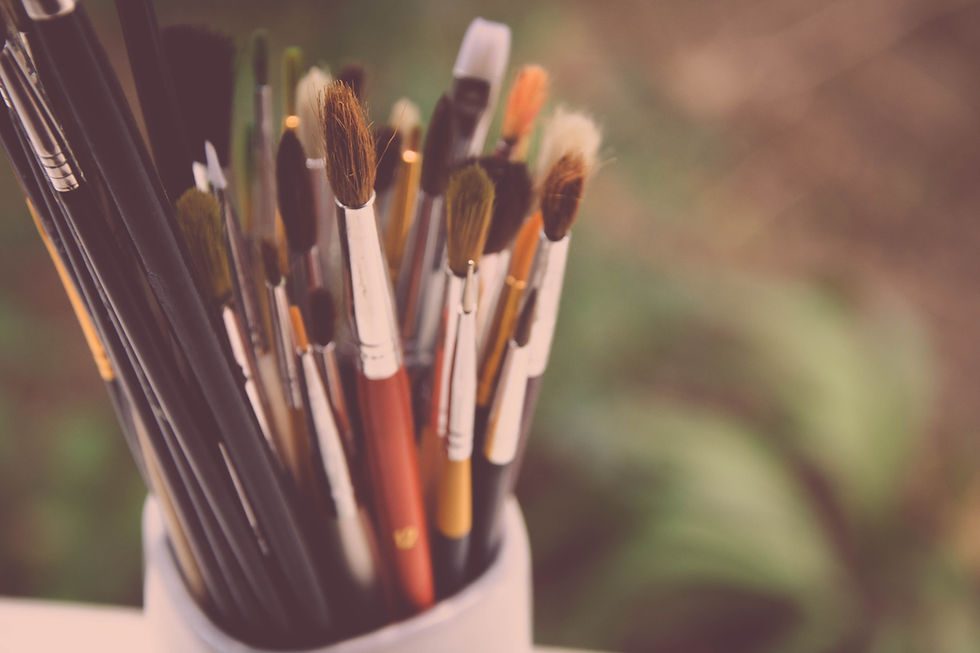
Once your collection starts growing, organization becomes important.
Use pencil cases, drawers, bins, brush holders, portable art boxes, or rolling carts to keep supplies organized.
Store pencils so they don't constantly roll around and become damaged.
Keep brushes clean and allow them to dry properly.
Keep paints sealed tightly.
Taking care of your materials means you'll spend less time searching for supplies and more time making art.
Artist-Grade vs. Student-Grade Supplies
You'll often see art materials described as student-grade or artist-grade.
Artist-grade materials generally offer higher pigment concentration, more extensive color ranges, and other qualities intended for professional or archival work.
Student-grade materials are often more affordable and can be excellent for learning.
If you're practicing basic techniques, you don't necessarily need the most expensive materials available.
Winsor & Newton Cotman watercolor is a good example of a student-level line that lets beginners explore watercolor without immediately investing in professional paints. Likewise, Liquitex offers acrylic products at different levels, allowing artists to move toward higher-grade materials as their skills develop.
In some cases, however, upgrading a particular supply can make a noticeable difference.
Paper is a good example. Using appropriate paper can make learning watercolor much easier than trying to force the medium onto an unsuitable surface.
Don't Buy a Giant Set Just Because It Looks Impressive
Large art sets can be tempting.
A box containing 100 pencils, dozens of paints, multiple brushes, and an assortment of tools looks like everything an artist could possibly need.
But more supplies don't automatically mean more creativity.
A huge set can actually make it harder to decide what to use.
Start with the materials that match your interests.
You can always expand your collection as your skills and preferences develop.
Spend More on the Supplies You Use Most

If you draw every day with graphite, it makes sense to invest in good pencils and paper.
If watercolor is your favorite medium, spend more of your budget on watercolor paper and paint.
If you're an acrylic painter, you may want to prioritize paint and brushes.
There's no universal rule that says every art supply needs to be expensive.
Instead, identify the materials that have the biggest impact on your work and spend accordingly.
For example, a watercolor artist might choose to buy Arches paper and Daniel Smith paints while using more moderately priced brushes. Another artist might prefer to spend more on Princeton or Escoda brushes and use a more affordable paint line.
There is no single correct combination.
Build a Beginner's Drawing Kit
If you're primarily interested in drawing, you can start with a surprisingly small collection.
Consider:
A sketchbook from Strathmore, Canson, or Stillman & Birn
HB, 2B, 4B, and 6B pencils from Faber-Castell, Staedtler, or Derwent
A kneaded eraser
A standard eraser
A reliable sharpener
A ruler
A small set of colored pencils from Prismacolor or Faber-Castell
A few fine-line pens from Sakura Pigma Micron or Faber-Castell
That is enough to begin practicing portraits, landscapes, still lifes, objects, shading, perspective, and countless other skills.
You can add charcoal, specialty pencils, blending tools, and other supplies as you discover what you enjoy.
Build a Beginner's Watercolor Kit
For watercolor, start with:
A small watercolor set from Winsor & Newton Cotman
Two or three brushes from Princeton
Watercolor paper from Strathmore, Canson, or Fabriano
A mixing palette
Two water containers
A pencil
A kneaded eraser
A cloth or paper towel
Once you've developed your skills, you can explore professional paints from Daniel Smith,
Schmincke, Holbein, or Winsor & Newton Professional Water Colour, along with premium papers such as Arches.
Build a Beginner's Acrylic Kit

For acrylic painting, consider:
If you become serious about acrylic painting, Golden is worth exploring for professional paints, gels, mediums, and specialty products.
You can expand your collection as you become more familiar with the medium.
Choose Paper Based on Your Medium
One of the easiest mistakes to make is buying a generic pad of paper and trying to use it for everything.
Paper is part of the medium.
Graphite, charcoal, ink, watercolor, acrylic, and colored pencils all interact differently with paper.
If you're serious about improving, pay attention to the surface you're working on.
You may discover that changing paper improves your experience more than buying another expensive pencil or brush.
Strathmore and Canson are excellent starting points for many artists, while Arches, Fabriano, and Hahnemühle offer premium options worth exploring as your experience grows.
Don't Forget About Experimentation
Your supplies should encourage you to experiment.
Try different pencil pressures.
Layer colored pencils.
Test wet and dry watercolor techniques.
Use a palette knife with acrylic.
Combine ink with watercolor.
Try charcoal on textured paper.
You learn more from actually using your supplies than from collecting them.
Keep a Few Cheap Supplies for Practice

Not every piece of paper needs to be archival.
Not every sketch needs expensive artist-grade materials.
Keep some inexpensive supplies for warm-ups, thumbnails, gesture drawings, color tests, and experiments.
This can also make it easier to take risks.
It's much less intimidating to make a terrible drawing on inexpensive paper than to make your first mark on an expensive sheet you've been saving for months.
Take Care of Your Supplies
Good supplies can last much longer when they're properly maintained.
Keep pencils sharp.
Clean brushes after painting.
Close paint tubes and containers tightly.
Store paper flat when appropriate.
Keep finished artwork away from excessive moisture and direct sunlight.
Taking care of your tools isn't glamorous, but it saves money and keeps your materials performing the way they're supposed to.
The Best Supplies Are the Ones That Help You Create
It's easy to become distracted by the newest pencils, newest paint sets, or beautifully packaged art kits.
But supplies are tools, not the source of creativity.
You can create a beautiful drawing with a handful of Faber-Castell or Staedtler graphite pencils.
You can make a wonderful watercolor painting with a small Winsor & Newton Cotman set.
You can experiment with acrylics using Liquitex without immediately investing in professional paints.
And if you're ready to upgrade, brands such as Golden, Daniel Smith, Arches, Caran d'Ache, Escoda, and Gamblin give experienced artists plenty of options to explore.
The right supplies should make it easier and more enjoyable to practice.
They don't have to be the most expensive supplies in the store.
Build Your Collection Slowly

You don't have to buy everything at once.
Start with the medium that interests you most.
Use it regularly.
Pay attention to what you wish you had.
Maybe you realize you need a softer pencil for deeper shadows. Perhaps you discover that your watercolor brush isn't large enough for washes. Maybe you find that the paper you're using doesn't work well with your technique.
Those observations will tell you what to buy next.
Over time, your collection will become personalized to the way you actually create.
You may eventually develop favorite brands and products, and that's perfectly normal. Artists often become loyal to particular pencils, brushes, papers, or paints simply because they like the way those materials feel in their hands.
Create More, Shop Less
There is a point where buying art supplies becomes a form of procrastination.
It's easy to tell yourself that you'll start creating once you have the perfect sketchbook, the perfect pencils, the perfect brushes, and the perfect paint set.
You don't need to wait.
Choose a few good supplies and start making art.
Use what you have.
Learn what you like.
Replace what isn't working.
Upgrade when you need to.
The best art supply collection isn't necessarily the largest or most expensive. It's the one that gives you the tools you need to sit down, open a blank page or canvas, and start creating.
LEARN MORE:


Comments