


Why It’s Okay to Be Bad at Art at First

Starting something new can be exciting until you realize that the picture in your head doesn't look anything like what ends up on the page. You may imagine a beautiful painting, a realistic portrait, or a perfectly composed drawing, only to create something that looks awkward and unfinished.
It's easy to take that experience personally.
You might start wondering whether you're actually talented enough to become an artist. You may compare your work to someone who has been drawing or painting for years and wonder why you can't produce something similar. You might even decide that you're simply "not artistic."
But being bad at art when you're learning isn't a sign that you should quit. It's one of the most normal parts of the creative process.
Every skilled artist was once a beginner. The difference between where you are now and where you might eventually be isn't necessarily talent. It's practice, observation, experimentation, patience, and the willingness to keep creating when your work doesn't yet match your expectations.
Your First Drawings Aren't Supposed to Be Your Best
When you pick up a pencil or brush for the first time, you have very little reason to expect professional-level results.
Art involves a surprising number of skills. You have to learn about proportion, perspective, composition, color, light, shadow, anatomy, texture, materials, and technique. Depending on what you're creating, there may be dozens of smaller skills involved as well.
You aren't going to master all of them immediately.
Your early work has a job: to help you learn.
That first awkward portrait doesn't need to be beautiful. It needs to teach you something about drawing faces. The first landscape you paint doesn't have to belong in a gallery. It can teach you something about mixing colors or creating depth.
Instead of asking whether your first attempts are good, ask what they can teach you.
Skill Comes Before Confidence
People sometimes assume that talented artists are naturally confident because they produce good work.
In reality, confidence often comes from experience.
The more you practice drawing hands, for example, the more comfortable you become with their basic shapes and proportions. The more landscapes you paint, the more familiar you become with creating distance and atmosphere.
Eventually, you begin to recognize problems before they happen.
That familiarity creates confidence.
You don't have to feel confident before you practice. Practice is one of the things that eventually creates confidence.
Being Bad at Something Is Temporary

When you're struggling with a new skill, it can feel like your current ability is a permanent description of what you're capable of.
It isn't.
Think about something you can do reasonably well today that you once couldn't do at all. You probably don't remember every awkward attempt that happened along the way.
Art works the same way.
You may currently struggle with drawing realistic eyes, but that doesn't mean you'll always struggle with them. You may not understand shading today, but you can learn it. Perspective may feel confusing now, but it becomes much easier once you've practiced the basic concepts.
Your current skill level is simply where you are right now.
It isn't where you're required to stay.
Your Taste May Develop Faster Than Your Skills
One of the most frustrating parts of learning art is realizing that you can recognize good artwork before you can create it yourself.
You may look at a drawing and immediately understand that it's beautiful, balanced, expressive, or technically impressive. Then you look at your own work and notice everything that isn't working.
This can create a frustrating gap between your taste and your ability.
But that gap is actually useful.
Your ability to recognize what you like gives you something to work toward. Over time, your technical skills can catch up with your artistic judgment.
Don't interpret the gap as proof that you can't become good at art. Think of it as evidence that you already have an eye for what you want to create.
Stop Comparing Your Beginning to Someone Else's Middle
Social media makes this particularly difficult.
You may see an artist post a stunning portrait, a detailed drawing, or a beautiful painting and then look at your own sketchbook and feel discouraged.
What you're seeing is often the finished result of years of practice.
You aren't seeing every failed drawing, unfinished painting, rejected idea, or frustrating practice session that came before it.
Instead of comparing your current work with someone else's polished work, compare it with your own older work.
Look for small improvements.
Maybe your lines are more confident. Perhaps your proportions are getting better. Maybe you're beginning to understand light and shadow. Those changes matter.
Mistakes Are Part of Learning

A mistake can feel discouraging when you're trying to create something beautiful.
But mistakes are also information.
If an arm looks too long, you've learned something about proportion. If a painting looks muddy, you've learned something about mixing colors. If a perspective drawing looks distorted, you've discovered something you need to practice.
Try to become curious about mistakes instead of embarrassed by them.
Ask yourself, "Why does this look wrong?"
That question is much more useful than, "Why am I so bad at this?"
The first question gives you something you can work on.
You Need Bad Drawings to Get Better Drawings
There is no shortcut around making unsuccessful artwork.
If you want to become better at drawing, you have to draw. And if you draw regularly, some of those drawings will be bad.
That's unavoidable.
You might draw ten faces and only like one. You might paint an entire canvas and decide you don't like it. You might spend hours on a project that ultimately doesn't work.
That's not wasted time.
Every attempt gives you experience with your materials, your subject, and your own creative process.
The drawings you dislike are still helping you develop the drawings you will eventually love.
Don't Turn Every Art Session Into a Test
If every time you sit down to create you're asking yourself whether the result is good enough, art can quickly become stressful.
Try separating practice from performance.
A practice drawing can be messy. A color study can be strange. A sketch can be unfinished. You can draw something simply to understand how it works.
Not everything needs to become a finished piece.
Your sketchbook should be a place where you're allowed to experiment without worrying about whether anyone else will see the results.
Practice Specific Skills

If you feel like you're "bad at art," try getting more specific.
Instead of saying, "I'm terrible at drawing," ask yourself what you're actually struggling with.
Is it:
Proportions?
Faces?
Hands?
Perspective?
Shading?
Color mixing?
Composition?
Drawing from observation?
Creating realistic textures?
Making figures look natural?
Once you identify the problem, you can practice it directly.
For example, if hands are difficult, fill several pages with hand studies. If perspective is confusing,
spend a week drawing boxes from different angles. If shading feels flat, practice spheres, cylinders, and cubes under different lighting conditions.
Specific practice makes improvement easier to see.
Let Yourself Draw the Same Thing More Than Once
You don't have to constantly create something new.
Drawing the same subject repeatedly can actually be one of the best ways to see improvement.
Try drawing the same object from different angles. Sketch the same person several times. Paint the same landscape under different lighting. Draw the same hand position until the structure starts to make sense.
Repetition gives you an opportunity to notice what changes from one attempt to the next.
You may discover that something that was difficult on Monday feels much easier by Friday.
Don't Confuse Realism With Artistic Ability
Realistic drawing is impressive, but realism isn't the only measure of artistic skill.
Some artists create highly stylized work. Others use bold colors, simplified forms, abstract shapes, exaggerated proportions, or unusual compositions.
If realism is your goal, practice it. But don't assume that your artwork is unsuccessful simply because it doesn't look photorealistic.
Art is also about communication, creativity, interpretation, and personal expression.
You may eventually discover that the style you enjoy most isn't the style you originally thought you wanted.
Find Artists Who Encourage You

Look for artists whose work inspires rather than discourages you.
When you see someone's work, notice what interests you about it. Maybe you love their use of color, their loose brushwork, their expressive faces, or the way they create atmosphere.
Instead of thinking, "I'll never be that good," ask, "What can I learn from this?"
You can study techniques without trying to become a copy of someone else.
Eventually, you'll combine what you've learned with your own preferences and experiences.
Give Yourself Permission to Experiment
Experimentation is difficult when you're afraid of making something bad.
But some of your most interesting creative discoveries may come from things that don't work exactly as planned.
Try a different pencil. Use a brush you've never used. Draw with your non-dominant hand. Change the colors. Try working larger or smaller. Use an unusual reference. Experiment with collage, ink, charcoal, watercolor, digital tools, or mixed media.
You don't have to like the result.
The point is to learn what happens.
Keep Some of Your "Bad" Art
Don't throw everything away.
Keep some of your early work in a folder or sketchbook.
Months or years from now, you'll be able to look back and see how far you've come. You may even find something you once disliked that you now appreciate for different reasons.
Your old artwork becomes a record of your development.
It's evidence that improvement doesn't happen all at once. It happens gradually, drawing by drawing.
Celebrate Small Improvements

You don't have to wait until you're an accomplished artist to feel proud of your progress.
Maybe you finally drew an eye that looks natural. Maybe you learned how to shade a sphere. Maybe you completed your first painting. Maybe you tried a new medium without worrying about whether you would be good at it.
Notice those moments.
Small improvements add up.
If you only celebrate major accomplishments, you'll miss much of the satisfaction that comes from learning.
Make Art Because You Enjoy It
There's a lot of pressure surrounding creative hobbies.
People may feel that if they're going to spend time drawing, painting, photographing, writing, or making something, they should eventually turn it into a career or side income.
You don't have to.
You can make art simply because you enjoy it.
You don't need to sell it. You don't need to post it online. You don't need to build a portfolio. You don't need anyone else to approve of it.
Sometimes the best reason to create is simply that you like creating.
Give Yourself Time
Becoming skilled at art doesn't happen overnight.
You may have periods when you improve quickly and other periods when it feels like you're stuck. That's normal.
Sometimes you're developing skills beneath the surface without immediately seeing a dramatic difference in your finished work.
Keep practicing.
Take breaks when you need them. Try new subjects. Study techniques. Look at other artists' work. Return to old projects.
Progress isn't always a straight line.
Remember That Art Is Supposed to Be Personal

Your artwork doesn't have to look like anyone else's.
Even when you're learning traditional techniques, you are eventually going to bring your own preferences, experiences, interests, and personality into your work.
Two people can draw the same subject and produce completely different results.
That's part of what makes art interesting.
Don't spend so much time trying to become "good" that you forget to become yourself.
The Beginner Stage Is Worth Enjoying
It's easy to wish your beginner stage away.
You want to skip the awkward drawings and jump straight to the beautiful ones. You want your hands to know what to do without thinking. You want your paintings to look like the images you've saved for inspiration.
But there's something valuable about being a beginner.
You are curious. You're discovering what you like. You're learning how materials behave. You're noticing things you didn't notice before. You're making mistakes that teach you something new.
You don't have to rush through that process.
Keep Going
Being bad at art at first isn't a problem to solve before you begin creating. It's part of learning how to create.
Your first drawing may be awkward. Your first painting may be messy. Your first attempt at perspective may be completely off. That's okay.
You aren't supposed to begin with years of experience.
Start where you are. Draw the crooked lines. Mix the wrong colors. Make the strange-looking portrait. Fill pages with sketches that may never become finished artwork.
Then do it again.
With time, you'll begin to notice changes. Lines will become more confident. Shapes will make more sense. Your eye will become more observant. Your hands will become more familiar with the process.
And eventually, you'll look at something you've created and realize that the artist who once thought, "I'm not very good at this," has quietly become much better.
You just have to be willing to let yourself be a beginner long enough to become an artist.
LEARN MORE:
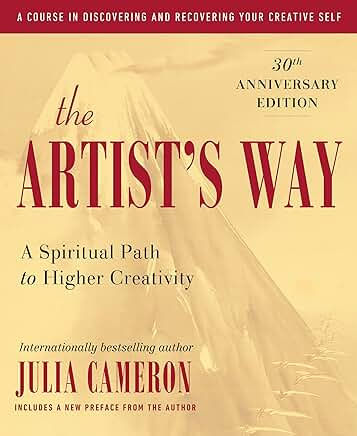
*As an Amazon affiliate I earn from qualifying purchases.


Comments