


Review: Sylvester and the Magic Pebble by William Steig

*As an Amazon Affiliate I earn from qualifying purchases.
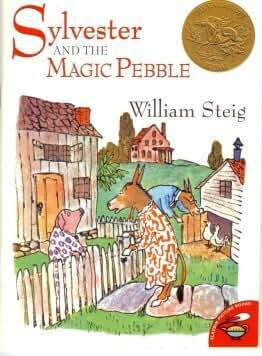
Sylvester and the Magic Pebble by William Steig is a deeply moving children’s story that blends whimsy with emotional depth in a way that lingers long after the final page. At first glance, it has the feel of a simple fairy tale, but it gradually unfolds into something much more reflective and heartfelt.
The story follows Sylvester, a young donkey who discovers a magical pebble that can grant wishes. At first, the magic feels exciting and full of possibility—Sylvester can transform situations instantly just by wishing for them. But everything changes when, in a moment of panic, he wishes himself into a rock. Suddenly, the story shifts from playful fantasy into something quieter and more emotional, as Sylvester is unable to move, speak, or reveal what has happened to him.
What makes the story so powerful is the sense of isolation Sylvester experiences once he becomes a rock. He is still present, still himself, but completely cut off from the world he knows. That contrast between inner awareness and outward silence creates a surprising emotional weight, especially for a children’s book. It gently introduces the idea that choices have lasting consequences, even when they are made in fear or confusion.
At the same time, the story never loses its sense of hope. Sylvester’s parents search for him tirelessly, showing a steady and unconditional love that forms the emotional core of the book. Their grief and longing are portrayed with a quiet sincerity that feels very real, making their eventual reunion with Sylvester all the more meaningful.
The illustrations, drawn by William Steig himself, are full of expressive detail and personality. The animals feel alive and emotionally rich, with faces that communicate warmth, worry, and joy in a very immediate way. The contrast between the colorful, lively world of the animals and Sylvester’s stillness as a rock is especially striking, reinforcing the emotional shift in the story.
What also stands out is how the magic in the story is never treated as purely whimsical. Instead, it carries emotional consequences that shape the narrative. The pebble is not just a source of wonder—it becomes a reminder of how carefully wishes should be considered, especially when made in moments of fear or distress.
The writing itself is simple and accessible, but it carries a quiet depth that gives the story its lasting impact. It moves between lighthearted moments and more somber reflections without feeling abrupt, creating a balance that works beautifully for both children and adults.
Sylvester and the Magic Pebble remains memorable because it combines wonder with genuine emotional truth. It is a story about love, loss, fear, and reunion, told in a way that feels gentle but meaningful. Long after reading it, the image of Sylvester as a silent rock surrounded by a world that still loves him continues to resonate, making it a quietly powerful classic.


Comments