


Review: Pippi Longstocking by Astrid Lindgren

*As an Amazon Affiliate I earn from qualifying purchase.
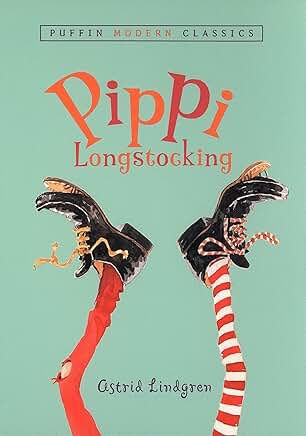
Pippi Longstocking by Astrid Lindgren is one of those children’s stories that feels completely unapologetic in the best way. From the very first pages, it introduces a main character who doesn’t fit into any normal rules of behavior or adulthood expectations—and never tries to.
That character, Pippi Longstocking, is living entirely on her own in a colorful house called Villa Villekulla with a horse on the porch, a monkey as a companion, and absolutely no adults telling her what to do. Right away, the book sets up a world where independence isn’t just encouraged—it’s taken to the extreme.
What makes Pippi so memorable is how completely different she is from the usual “well-behaved child” you expect in older children’s literature. She’s incredibly strong, wildly imaginative, and completely uninterested in following rules just because they’re rules. She walks into situations and just decides how they’re going to go, often turning things upside down without even meaning to.
There’s something refreshing about how confident she is in her own way of doing things.
But she’s not just chaotic for the sake of it. A lot of what she does comes from her own logic, which often makes more sense than the strict adult world around her. She questions authority, bends expectations, and refuses to be embarrassed by things other people might worry about. That makes her feel like a kind of symbol for freedom—though a very exaggerated, playful version of it.
The story also balances her wildness with a surprising amount of kindness. Even though Pippi doesn’t follow rules, she isn’t unkind. In fact, she often goes out of her way to help others, especially when she sees unfairness or someone being treated badly. That mix of chaos and generosity is part of what keeps her from feeling like just a troublemaker. She has her own moral compass—it just doesn’t look like anyone else’s.
The children who interact with her, like Tommy and Annika, help ground the story. At first, they’re amazed by her freedom and strength. She can do things they could never imagine doing, and she encourages them to think differently about what’s possible. But they also represent a more traditional kind of childhood—school, rules, routines—which makes the contrast with Pippi even clearer.
One of the most interesting things about the book is how it gently pushes back against the idea that children need to be controlled all the time. Through Pippi, it explores what happens when a child is given total independence. Sometimes it leads to fun and creativity, and sometimes it leads to confusion or chaos—but it always leads somewhere unexpected.
The tone stays playful throughout, even when situations get a little outlandish. There’s a sense that nothing is meant to be taken too seriously, which fits Pippi’s personality perfectly. She doesn’t worry about how she’s “supposed” to behave, and the book doesn’t seem to worry too much either.
At its core, Pippi Longstocking is really about imagination and independence pushed to their limits. It asks what a child might do if they were completely free from rules and expectations—and then it answers that question with humor, heart, and a lot of unpredictable adventures.
And thanks to Astrid Lindgren, Pippi becomes more than just a funny, strong character. She turns into a lasting reminder that childhood doesn’t have to look one single way—and that sometimes the most interesting people are the ones who refuse to fit the mold at all.


Comments