


Lesser-Known National Parks to Explore

Updated: Sep 24
When most people think of U.S. national parks, they picture iconic places like Yellowstone or Yosemite. But some of the most memorable experiences happen in parks that are quieter, more remote, and less structured around mass tourism.
These lesser-known parks tend to feel more immersive because they require a different rhythm of travel. Services are fewer, distances are larger, and planning matters more—but in return, you get space, silence, and landscapes that feel less mediated.
North Cascades National Park, Washington
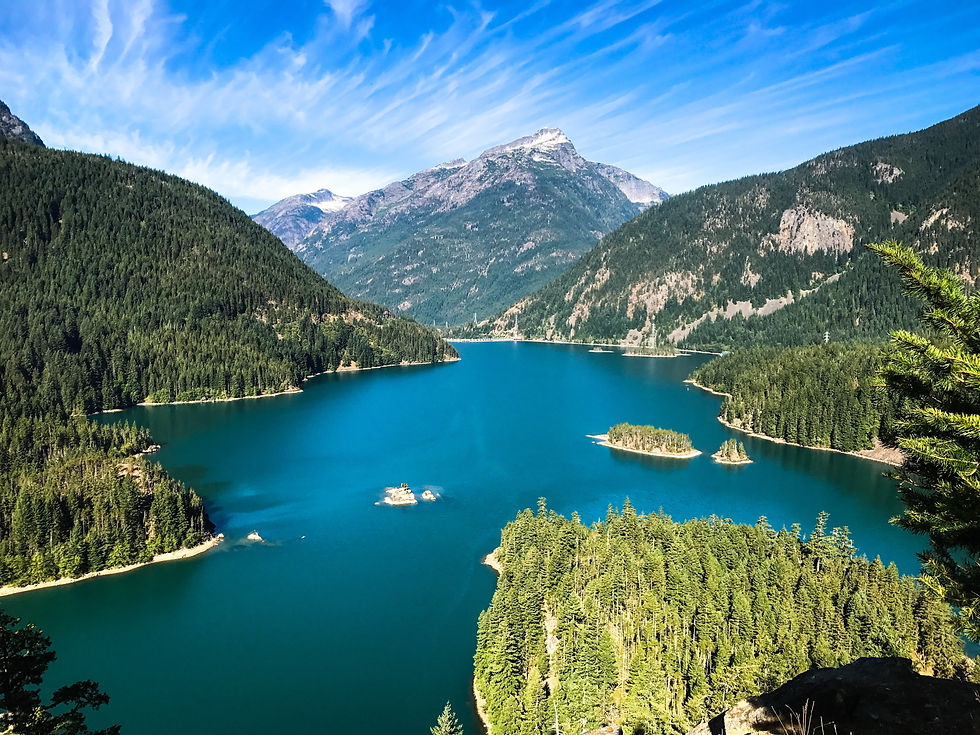
North Cascades National Park is one of the most rugged mountain landscapes in the U.S., defined by glaciers, jagged peaks, and deep forest valleys. It’s extremely close to Seattle geographically, but feels surprisingly remote because so much of it is undeveloped and difficult to access.
Experiences:
Driving Highway 20 where the scenery shifts rapidly from dense forest to alpine ridgeline
Standing at Diablo Lake Overlook where glacial sediment gives the water a vivid turquoise color
Hiking Cascade Pass where trails open into wide basins surrounded by glacier-carved peaks
Exploring Ross Lake by kayak or boat, where long stretches feel completely untouched
Experiencing true silence on early morning hikes with minimal foot traffic even in peak season
Where to stay:
Sun Mountain Lodge (Winthrop) – A well-known mountain lodge with panoramic valley views, fireplaces, and a slightly upscale “wilderness comfort” feel. It’s popular with hikers who want comfort after long days outdoors.
Freestone Inn (Mazama) – A cozy, rustic-style lodge that feels quieter and more intimate, often chosen by travelers looking for slower pacing and direct access to trails.
Lakeside cabins near Diablo Lake – Simple, functional cabins close to the water; ideal for early morning hiking starts and a more stripped-back experience.
Colonial Creek Campground – One of the most popular in-park options, offering direct access to trails and lake views but very limited amenities.
Where to eat:
East 20 Pizza (Winthrop) – A casual, lively post-hike stop known for hearty portions, cold beer, and a relaxed atmosphere. It’s more about refueling than fine dining.
Sun Mountain Lodge Dining Room – Seasonal, locally inspired menus (salmon, game, and regional produce) served in a lodge setting with sunset mountain views.
The Fainting Goat (Winthrop) – Focusing on sustainable meats and seasonal local produce in a laid- back yet vibrant environment.
Mazama Coffee & Roastery – Simple food and signature coffee spot where hikers stock up before heading deeper into the park.
Great Basin National Park, Nevada

Great Basin National Park is one of the most isolated national parks in the country, combining desert, alpine forest, caves, and some of the darkest night skies in North America.
The experience here is shaped heavily by isolation—this is a park where you feel distance from everything else almost immediately.
Experiences:
Touring Lehman Caves, where cool underground chambers contrast sharply with the surrounding desert
Driving Wheeler Peak Scenic Drive, transitioning from dry valley floors to alpine terrain in under an hour
Walking among bristlecone pines that are thousands of years old and shaped by extreme wind and altitude
Stargazing under skies where the Milky Way is often clearly visible without equipment
Hiking alpine lakes where reflections remain still due to low visitor numbers
Where to stay:
Whispering Elms Motel (Baker) – A simple roadside motel that acts as one of the main bases for park visitors. It’s basic but practical and close to the entrance.
Border Inn (Baker area) – A slightly more developed stop with a restaurant and gas station, often used for convenience rather than comfort.
Park Campgrounds (Lower/Upper Lehman Creek) – Quiet, nature-focused sites close to trails and caves, with minimal infrastructure.
Ely hotels (slightly farther out) – More comfortable lodging options used by travelers willing to drive longer distances into the park.
Where to eat:
Great Basin Cafe (Baker) – One of the only sit-down dining options nearby, serving classic American comfort food in a very small-town setting.
Salt & Sucre (Baker) – A small café offering breakfast sandwiches, coffee, and simple meals for early park starts.
Ely diners and grills – More variety is available here, including steaks, burgers, and traditional roadside American dining.
Most travelers rely on pre-packed food, reinforcing the park’s remote character.
Isle Royale National Park, Michigan

Isle Royale National Park is one of the most remote national parks in the United States, located in Lake Superior and accessible only by ferry or seaplane. There are no roads, no towns, and no modern infrastructure beyond ranger stations and a few lodges.
Experiences:
Multi-day backpacking along isolated trail systems with long distances between other hikers
Kayaking rugged shorelines where water clarity reveals submerged rock formations
Observing moose in wetlands and forests, especially at dawn or dusk
Experiencing one of the most studied predator-prey ecosystems in North America (wolves and moose)
Traveling by water between trailheads, making navigation part of the adventure.
Where to stay:
Rock Harbor Lodge – The main accommodation on the island; simple rooms, lakeside views, and a very remote feel despite being the most “developed” option available.
Windigo Camper Cabins – Rustic shelters on the western end of the island, minimal amenities but useful for multi-day routes.
Backcountry campsites – The primary way to experience the island; spaced far apart and accessed only by foot or kayak, emphasizing solitude.
Copper Harbor hotels (before ferry) – Comfortable mainland stays used for staging before departure.
Where to eat:
Rock Harbor Lodge dining – Simple, scheduled meals designed for hikers and overnight guests rather than culinary variety.
Ferry terminal cafés (Copper Harbor) – The last access point to prepared meals before entering the island wilderness.
Most visitors bring all food supplies, making eating a logistical part of trip planning rather than a flexible activity.
Congaree National Park, South Carolina

Congaree National Park protects one of the largest old-growth bottomland hardwood forests in the U.S., shaped by seasonal flooding and dense, humid ecosystems.
Experiences:
Walking the elevated boardwalk through towering hardwood forest that feels almost enclosed
Canoeing Cedar Creek through flooded forest areas during high-water seasons
Experiencing synchronized firefly displays during peak seasonal events
Night hikes where forest soundscapes feel dense and immersive
Birdwatching in one of the most biologically rich forests in the Southeast
Where to stay:
Columbia hotels (20–30 minutes away) – Most visitors stay here; it’s a modern city base with easy park access but no wilderness immersion.
Graduate Columbia – A boutique-style hotel with local design influence and a more character-driven stay.
Hampton Inn & Suites Columbia – A reliable, comfortable option often used by families and road trippers.
Bluff Campground (inside park) – Quiet, wooded camping that feels close to nature but still accessible.
Where to eat:
Motor Supply Co. Bistro (Columbia) – Farm-to-table restaurant focusing on seasonal Southern ingredients in a modern setting.
Pearlz Oyster Bar – Casual seafood spot known for oysters and relaxed atmosphere.
DiPrato’s Delicatessen – Popular breakfast and lunch stop with sandwiches and baked goods.
Roadside diners along Highway 601 – simple, local meals used by park visitors on the way in or out.
Lassen Volcanic National Park, California

Lassen Volcanic National Park is a rare place where all four types of volcanoes can be found in one park. It combines geothermal activity, alpine lakes, volcanic peaks, and forested areas in close proximity.
Experiences:
Walking through Bumpass Hell where steam vents and boiling pools create a surreal geothermal landscape
Hiking Lassen Peak for sweeping volcanic views across Northern California
Driving through shifting terrain where snow, lava rock, and forest alternate rapidly
Exploring Manzanita Lake for reflections of volcanic peaks on still water
Stopping at roadside geothermal features without needing long hikes
Where to stay:
Drakesbad Guest Ranch – A historic, rustic lodge inside the park offering a slow-paced, nature-focused stay with minimal modern distractions
Manzanita Lake Campground – One of the most convenient in-park camping options, close to trails and lake views
Chester hotels and cabins – The most common base town with basic but comfortable lodging options
Susanville accommodations – Larger town with more variety in hotels and amenities
Where to eat:
Highlands Ranch Resort Restaurant – Lodge-style dining with forest views and seasonal menus
Chester cafés – Casual breakfast and coffee spots used by hikers before entering the park
Susanville diners and grills – Standard American dining with broader variety than closer gateway towns
Many visitors rely on picnic meals inside the park due to limited in-park services
Theodore Roosevelt National Park, North Dakota

Theodore Roosevelt National Park is defined by open space—badlands, prairie, and wide horizons that stretch uninterrupted in every direction.
Experiences:
Driving scenic loops where wildlife is often visible directly from the road
Watching bison and wild horses move across open prairie landscapes
Exploring eroded badlands formations shaped over millions of years
Viewing sunsets that stretch across uninterrupted horizon lines
Short hikes that feel larger due to the scale of the surrounding landscape
Where to stay:
Rough Riders Hotel (Medora) – Historic hotel tied to Theodore Roosevelt, combining Western charm with modern comfort
Badlands Motel (Medora) – Simple, convenient lodging close to park entrances
Park campgrounds (Cottonwood/Juniper) – Exposed, quiet sites surrounded by open land
Where to eat:
Pitchfork Steak Fondue (seasonal) – Outdoor dining experience where steaks are cooked over hot oil vats with sunset views over the badlands
Theodore’s Dining Room (Rough Riders Hotel) – Traditional American dining in a historic setting
Little Missouri Saloon & Dining – Casual Western-style meals with a local feel
Hidden Springs Java – Coffee shop and bakery with light fare options.
Channel Islands National Park, California

Channel Islands National Park is one of the most isolated coastal parks in the U.S., accessible only by boat or plane. The islands have remained largely undeveloped, preserving ecosystems that exist nowhere else.
Experiences:
Boat rides where dolphins and whales are frequently visible along the route
Kayaking through sea caves carved into coastal cliffs
Hiking cliffside trails with uninterrupted Pacific Ocean views
Observing island foxes, a species unique to the islands
Camping in complete darkness with no nearby light pollution
Where to stay:
Ventura hotels (pre-trip base) – Comfortable coastal stays used for ferry access and planning
Crowne Plaza Ventura Beach – Oceanfront hotel ideal for early departures
Waypoint Ventura – Boutique-style modern accommodation near the harbor - stay in vintage trailers.
Island camping only – Primitive campsites with no facilities beyond basic shelter
Where to eat:
Brophy Bros (Ventura Harbor) – Seafood restaurant overlooking the marina, popular for pre-ferry meals
Lure Fish House – Higher-end seafood dining with local coastal focus
Ventura Harbor cafés – casual breakfast and coffee stops before departure
All food must be packed in for island stays, making meal planning essential
These parks are less about crowds and landmarks and more about immersion. Whether it’s the alpine isolation of North Cascades National Park, the volcanic diversity of Lassen Volcanic National Park, or the wilderness isolation of Isle Royale National Park, each destination offers a slower, quieter version of travel.
They ask for more planning—but they give back something harder to find: space, silence, and the feeling of being far from everything.
LEARN MORE:

*As an Amazon affiliate I earn from qualifying purchases.


Comments